Nature Nugget – July 28

If a tree falls in the forest…should it stay there?

We’ve all seen fallen trees in the woods. Whether it’s from a bad storm or just the end of a tree’s life, eventually a tree will die. If you’re like me, you’ve noticed that in some state parks and forests, when a tree falls it’s just left there. Coming from a world of manicured lawns where anything unsightly is removed, this always felt wrong to me. Shouldn’t they remove the log? Can’t it be used for something?

In today’s Nature Nugget, I want to talk about how dead and decaying trees actually form an important part of a forest’s ecosystem. Although the tree has died, its part in the story is just beginning! But first some terminology: a dead tree that has fallen is a log. A dead tree that is still standing is a snag.
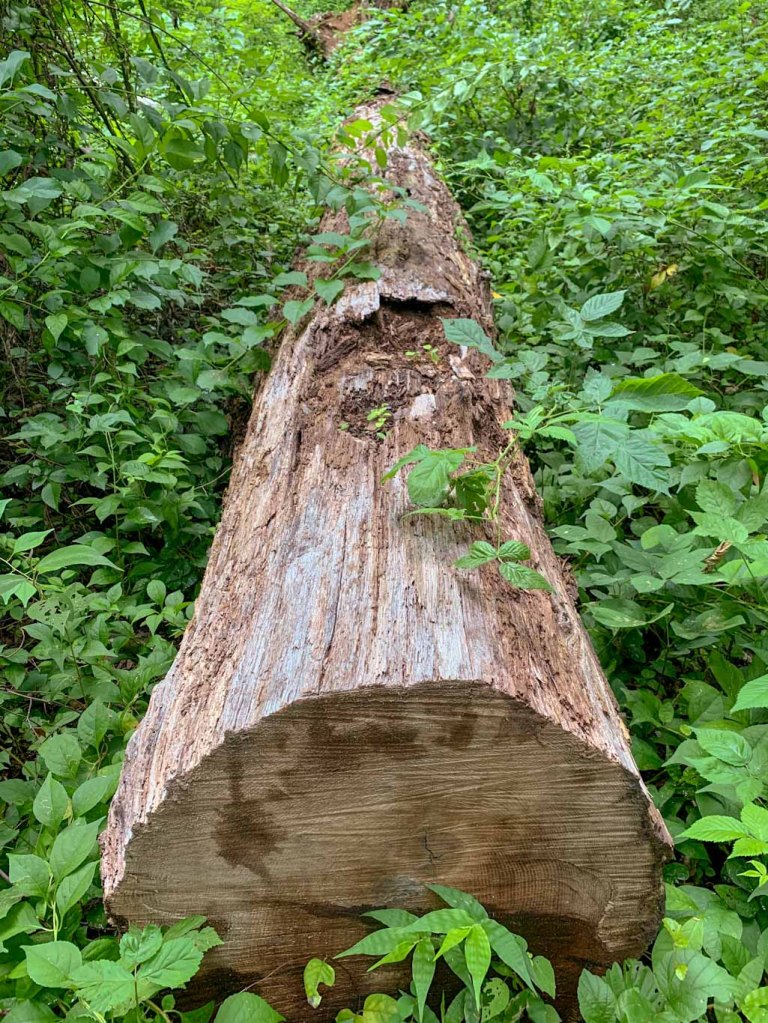
Fallen tree that was cut to remove from trail

What do dead and decaying trees provide?

  • Roosting spot for birds such as woodpeckers
  • Main home for bugs like ants, beetles, wasps and bees. Dead logs are also prime homes for larger critters like salamanders, frogs, and even snakes. Some scientists estimate that dead wood provides food and homes for more than 40% of forest wildlife species!
  • Form the bottom of the food chain for detritivores (organisms that feed on dead material) like fungi and bacteria which are then consumed by other animals
Fungi growing on decomposed log
  • Prevents erosion by reducing stormwater runoff. Logs in running water also prevent bank erosion, as well as trap sediment so that it doesn’t flow any further along.
  • Replenishes nutrients in the soil. Research has shown that trees are the main source of organic material in soil!
  • Plays an important role in forest regeneration. Not only does a fallen tree open up the canopy and make room for new trees, they also can become an extremely fertile growing medium for seeds and seedlings that have gathered there.
  • In ponds and streams, downed trees serve as sunning spots for turtles, fishing perches for birds, and even nests for fish.
Turtles sunbathing on a log

I think it’s pretty clear that dead tree are essential to the forest ecosystem! Now some people might be wondering about dead hazards and that’s a good point! Dead trees, especially snags can be seen as a fire hazard. And with wildfires constantly in the news, it’s definitely something to be concerned about! But remember, some wildfires are natural and can even be good for the ecosystem. There are certain species of plant that even need fire in order to germinate! However, if you have a dead tree on your property, you should get it removed. Dead wood is still a fire hazard and also a falling hazard especially near homes and people. Leave the dead wood to the forest!

Dead and decaying trees form an important part of a forest’s ecosystem. That’s why they are often left on the forest floor in parks. It doesn’t mean that the park isn’t well taken care – quite the opposite actually! Next time you pass a decaying tree, just think of all the life that could be starting a new inside of it.

Sources:

https://www.thewildlifenews.com/2018/12/20/the-ecological-value-of-dead-trees/
https://www.fs.fed.us/pnw/sciencef/scifi20.pdf
https://www.americanforests.org/blog/nurse-logs-healers-forest/
https://www.nnrg.org/habitat-piles/
https://woodlandfishandwildlife.com/wp-content/uploads/2019/12/Family-Forests-and-Wildlife_What-you-Need-to-Know_reduced.pdf
https://dnr.maryland.gov/streams/Publications/WoodyDebrisForWeb.pdf
Nature Nugget – July 21

“Of all the paths you take in life, make sure a few of them are dirt.”

John Muir
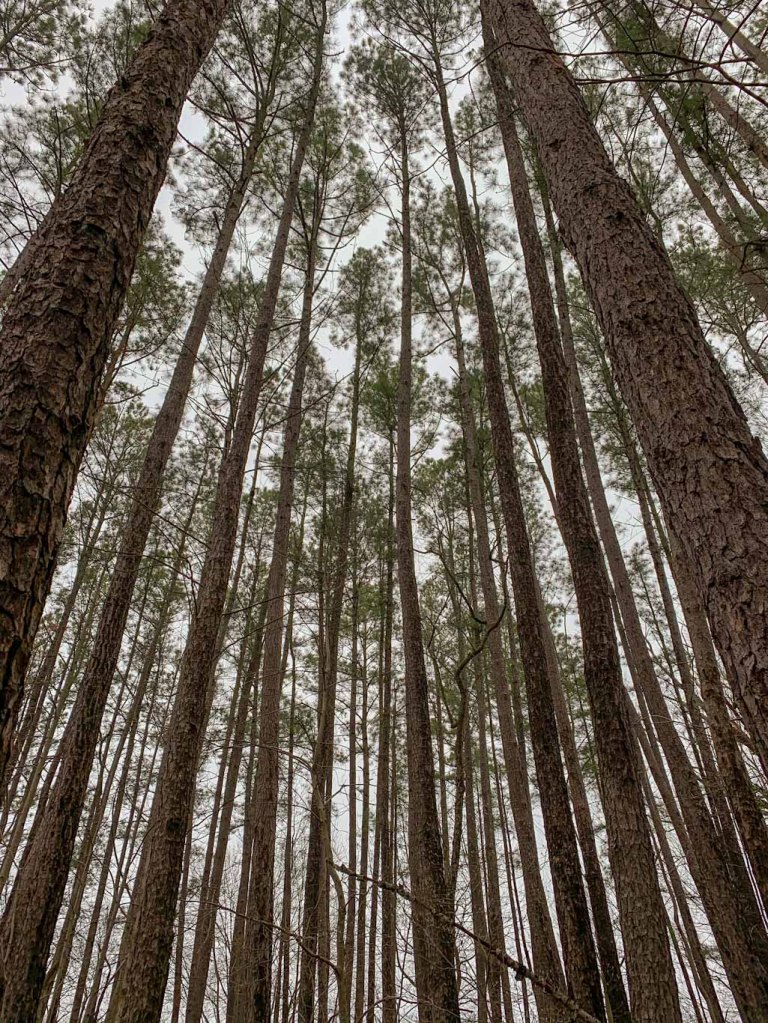
Pine Grove in Seneca Creek State Park

Guys I wanna take a sec to talk about trail etiquette. Since the onslaught of COVID-19 there are more people than ever interested in hiking (YAY)! But I’ve also been seeing a lot of bad trail etiquette (BOO). So I want to talk a little bit about what to expect in the woods and how to be a good neighbor to your fellow nature-lovers, including plants and animals.

  1. Leave. No. Trace – Guys, if you forget everything else from this post please please please remember this one thing. Everything you bring has to leave with you. Some things are obvious, like don’t leave an empty water bottle or a plastic food wrapper. But remember, you also shouldn’t toss an apple core. But wait, you think, isn’t that composting? NO. You are introducing something unnatural to the environment and that could have bad effects. Not to mention that now people that come after you have to smell your rotting apple. I like to pack an extra plastic grocery bag in my daypack to put any trash in!
  2. Right of Way – Yup, just like on the road. If you need to yield step carefully off the trail, being aware of plants and animals nearby. It’s usually better to step downhill. Now this might vary trail to trail based on usage but generally:
    • Hikers going uphill have the right of way
    • Bikes yield to hikers and horses
    • Hikers yield to horses – always step slowly to the side so not to startle the horse. If coming up behind a horse, make yourself known to the rider and animal.
  3. Make Yourself Known – it’s always nice to greet a fellow hiker plus it’s great to not be startled by someone coming up behind you. I try to say hello to everyone I see on a trail and I’m always surprised how few reciprocate. It’s always good to foster a friendly trail atmosphere.
  4. Stay on trail – going off trail can hurt the local plants and animals. You’re in their home, don’t mess it up! In this vein, it’s better to walk through a puddle or mud. Widening trails like that is bad for sustainability. If it’s rainy or muddy, maybe leave the hiking for another day!
    • If you have to go off trail to relieve yourself (it happens), make sure to be at least 200 feet away from the trail and any water sources. Leave No Trace applies to toilet paper too!
  5. Leave Wildlife Alone – Don’t try to approach animals, this could be potentially dangerous to you and also hurt the habitat. Animals want their space too! Also don’t feed the wildlife, this disrupts their foraging habits and wrongly teaches them that humans provide food
  6. Enjoy the Quiet – Nature is so peaceful and nothing ruins it more than a loud group or someone playing music. Personally, I only use my phone for taking pictures on the trail, but just bring headphones if you want to listen to something. Just be cautious of your surroundings and only ever have one headphone in at a time! Remember, you don’t want to ruin someone else’s peaceful hike.
  7. Pets – If bringing your furry friend, always keep them on a leash. Make sure they can stay under control if you encounter wildlife! And bring bags to carry out pet waste. Aside from litter, nothing enrages me more than dog poo on the trail! C’mon people!
  8. Be Prepared – This may sound self explanatory but seriously make sure you know what you’re getting into!
    • Wear proper clothing for the trail conditions. Bring a jacket if the elevation changes a lot, or a rain jacket if you anticipate precipitation. Wear the right shoes and have crampons if it’s snowy or icy
    • Look over the trail map before heading out and know approximately how far you’re going. If applicable, know what trail blazes to follow
    • Bring plenty of water! Yes it’s heavy but when you’re hiking sometimes you don’t even realize that you’re getting dehydrated until it’s too late! I bring a huge bottle with me and also leave some in the car
    • If you’re going for a long hike, make sure to have some snacks to keep you going. We almost always pack a lunch to have during our hike.
    • Check the weather before you leave! Weather conditions can change so quickly and you don’t want to get caught outside during severe weather
    • Let someone know where you’re going, especially if you’re hiking alone

At the end of the day, respect is the key to trail etiquette. Have respect for other hikers and for the plants and animals whose home you’re visiting. Now get outdoors!

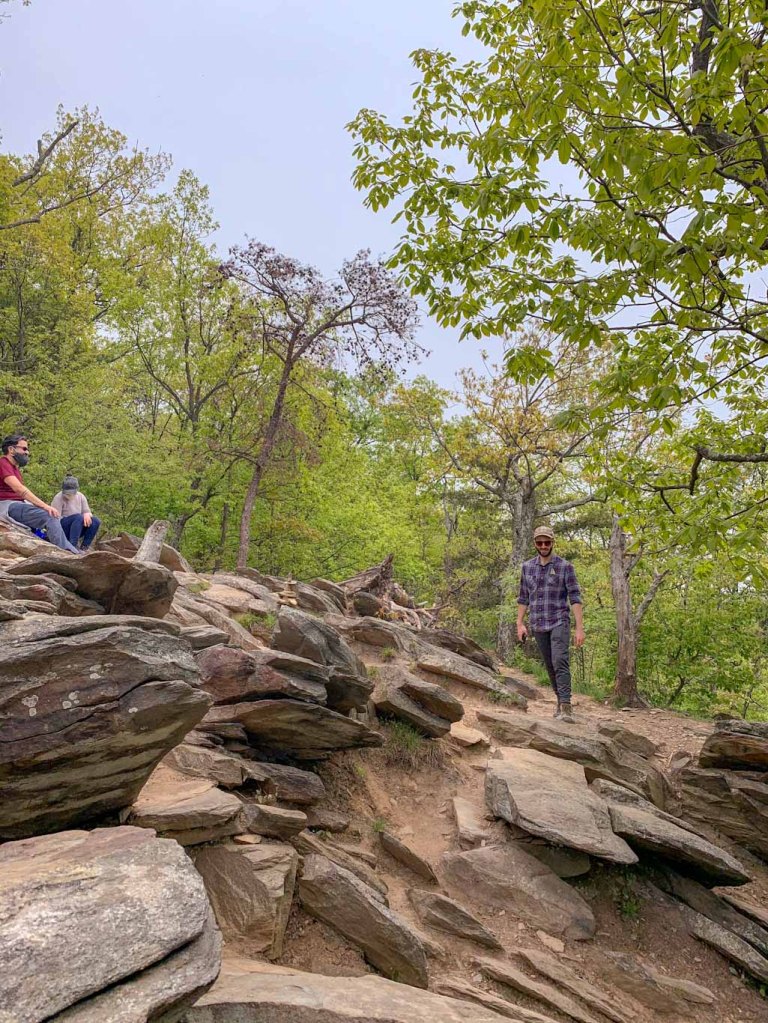
King and Queen Seat at Rocks State Park
Weverton Cliffs