Rachel Carson Conservation Park & Elder Pine Brewing and Blending Co

Brookeville, MD

This is not a drill! Brewery only 0.2 miles from the trailhead. I repeat, 0.2 MILES! Yup this is what beer hiking dreams are made of! Rachel Carson Greenway is a delightful little park in the Brookeville area that has fields, forests, and streams! But the best part is that Elder Pine Brewery is just around the corner. In fact, you can see it through the trees! We should start a petition for extending the trail into their parking lot! Plus if you’re feeling really frisky, Waredeca Brewing is only 1.3 miles away and Brookeville Beer farm is only 4 miles! Truly a beer lover’s mecca. So let’s get to it!
THE HIKE: Rachel Carson Conservation Park

Length: 4.1 miles
Elevation Gain: 314ft
Difficulty: Easy
Time: 1.5 hours
Trail use: Hiking, biking, dogs
Parking: Large parking lot, no fee
H&H: 3/5

The Rachel Carson Conservation Park is managed by Montgomery County Parks and features over 6 miles of trails! It’s popular with hikers and horseriders alike, although most times I’ve been there, it’s very quiet and peaceful. There’s plenty of parking and the trails all start in a meadow that has beautiful wildflowers in the spring. Be warned though, the sun in this open meadow can be brutal so bring a hat! It was incredibly hot and humid the day that J and I came so we knew it would be a short hike day. We decided to follow the Rachel Carson Greenway trail which runs the perimeter of the park, then took the Scarlet Tanager trail back to the meadow. There are a few other trails in the park that you can take too if you’d take a different route.

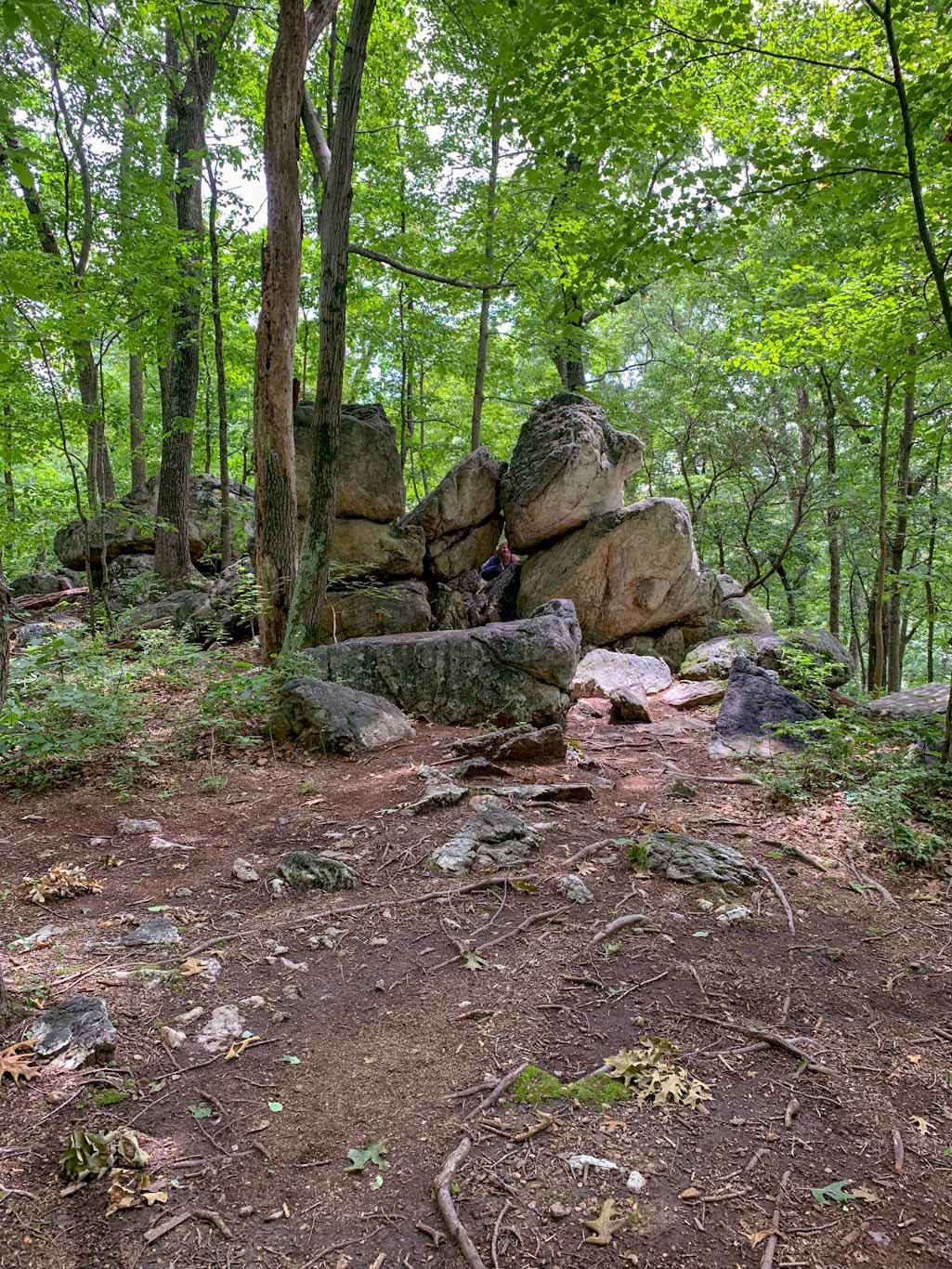
We liked this hike because it ran along a river which offered plenty of chances for scrambling over rocks if that’s your thing. J prefers to stay on land and be my photographer. This hike also had some cool rock formations. I’m always surprised to see such huge rocks in the woods so far away from any mountains. We also found plenty of ripe wineberries, delicious! 
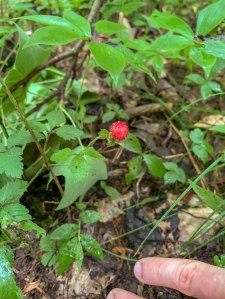
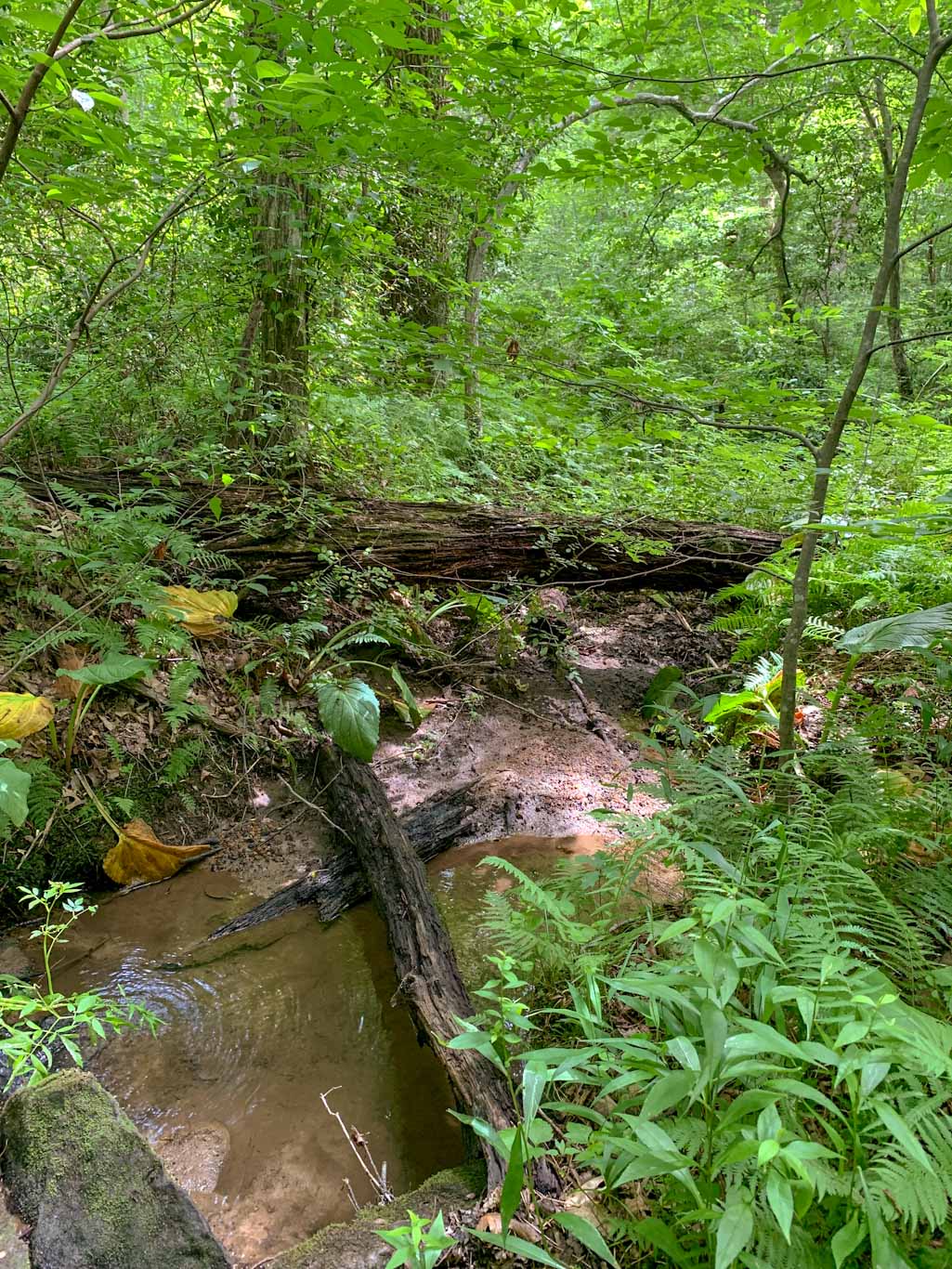
Despite the pretty views, parts of this trail were pretty overgrown. There was one trail that we had to turn around because the stream crossing was too deep and there were no stepping stones. It was also pretty muddy and incredibly buggy. I wish we had waited until later in the year to do this hike! This is just a reminder to bring plenty of water when hiking in the summer!

THE BEER: Elder Pine Brewing and Blending Co.

Address: 4200 Sundown Rd, Gaithersburg, MD 20882
Distance from Trail Head: 0.2 miles, 1 min
Website: https://www.elderpine.com/
Food?: Food Trucks
H&H Rating: 5/5
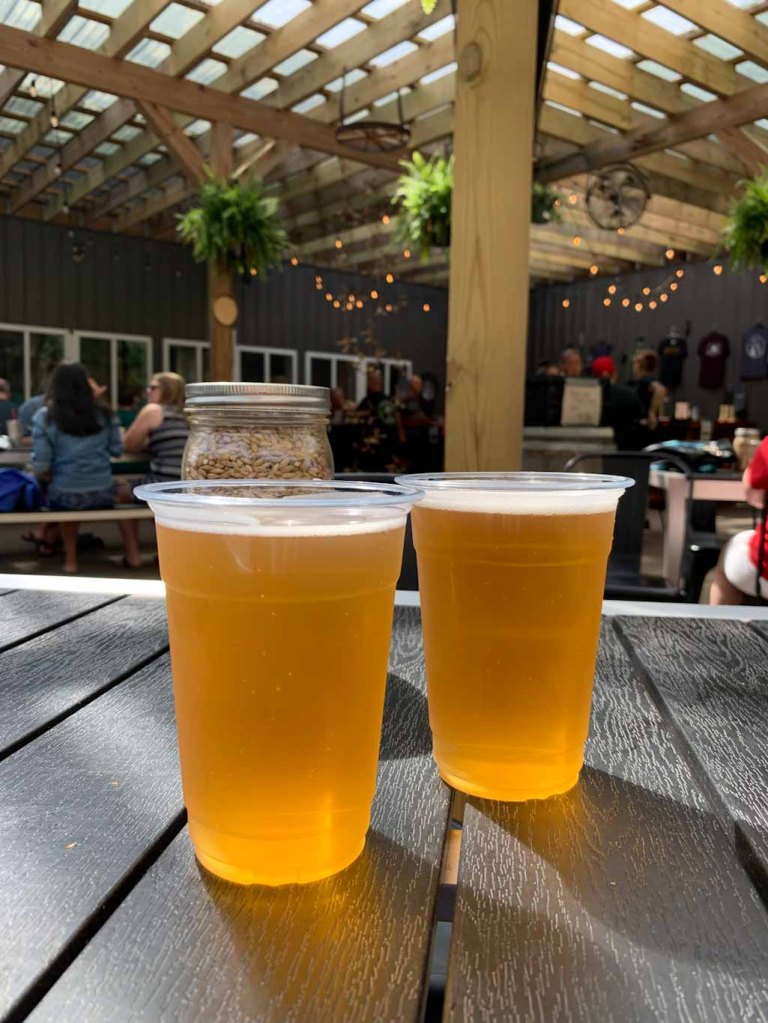
We hadn’t been to Elder Pine since they first opened in 2019 so it was really good to be back. This place has really expanded and opened up tons of outdoor seating. There’s a really cool section of the pine forest that’s decked out with string lights and seating. Unfortunately, this was all full when we got there so we sat on the patio. Easier access to the bar! Elder Pine always puts out some solid beers. This time we were feeling something more light (did I mention it was SUPER) hot out?? To start out we tried two of their pilsners. The Ameno was an italian style pilsner that was super grainy but very refreshing. The 10 Plato Pivo was a Czech style pilsner which was cold fermented and made with a yeast from the Czech Republic. It was incredibly crisp and went down very easily. It was really neat to compare the flavors of these two pilsners; so similar but with slightly different tastes that made a huge difference. 

Overall, Elder Pine was a great time! They had plenty of seating and everyone was so friendly. They also had a great food truck serving up some delicious BBQ. Honestly, we were having such a nice time sitting on the patio that we completely forgot to look at the inside taproom. Guess we gotta go back soon. 
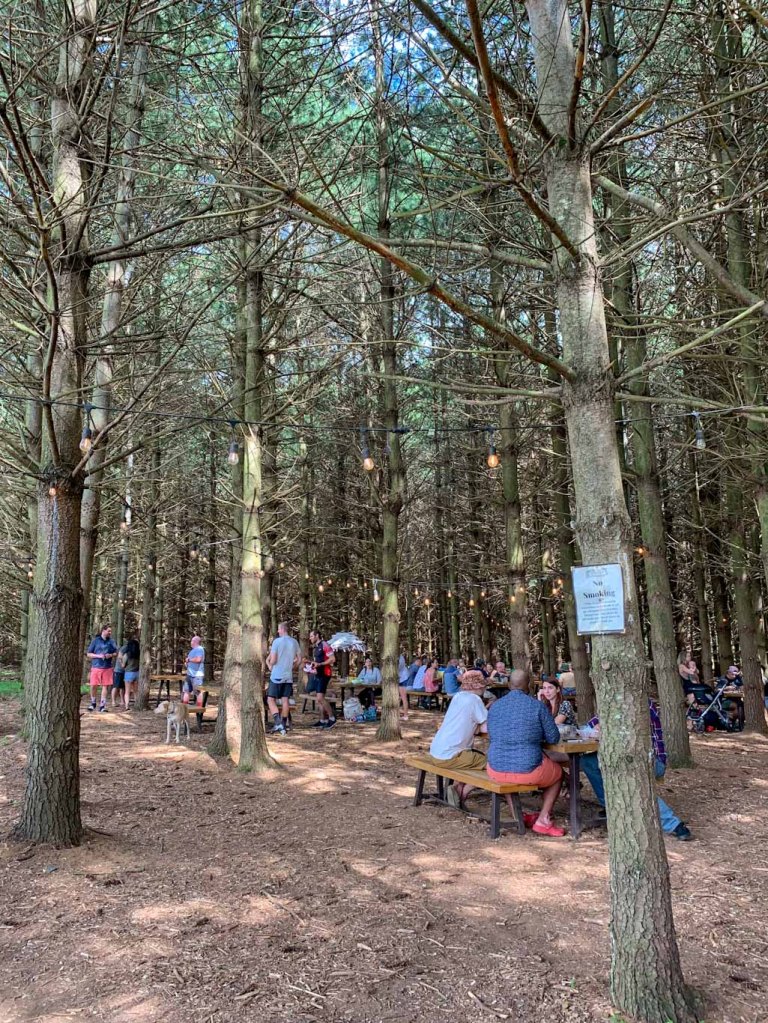
Our Beer:

  • Veritable Villein – Saison – 6% 
  • Every Villein Is Lemons – Saison – 6%
  • Anti-Hot – NEIPA – 6.6%
  • Ameno – Italian Style Pilsner – 5%
  • 10 Plato Pivo – Czech Style Pilsner – 4%

SUM UP: 

Rachel Carson Conservation Park is a quiet park in Brookeville that’s open to hikers, leashed dogs, and horse riders. There are over 6 miles of trails including wooded and field trails. It can get buggy so be prepared. Just around the corner is Elder Pine Brewery which makes incredible beers and has a delightfully woodsy vibe. See if you can get a spot in an Adirondack chair under the pine trees!

Nature Nugget – July 28

If a tree falls in the forest…should it stay there?

We’ve all seen fallen trees in the woods. Whether it’s from a bad storm or just the end of a tree’s life, eventually a tree will die. If you’re like me, you’ve noticed that in some state parks and forests, when a tree falls it’s just left there. Coming from a world of manicured lawns where anything unsightly is removed, this always felt wrong to me. Shouldn’t they remove the log? Can’t it be used for something?

In today’s Nature Nugget, I want to talk about how dead and decaying trees actually form an important part of a forest’s ecosystem. Although the tree has died, its part in the story is just beginning! But first some terminology: a dead tree that has fallen is a log. A dead tree that is still standing is a snag.

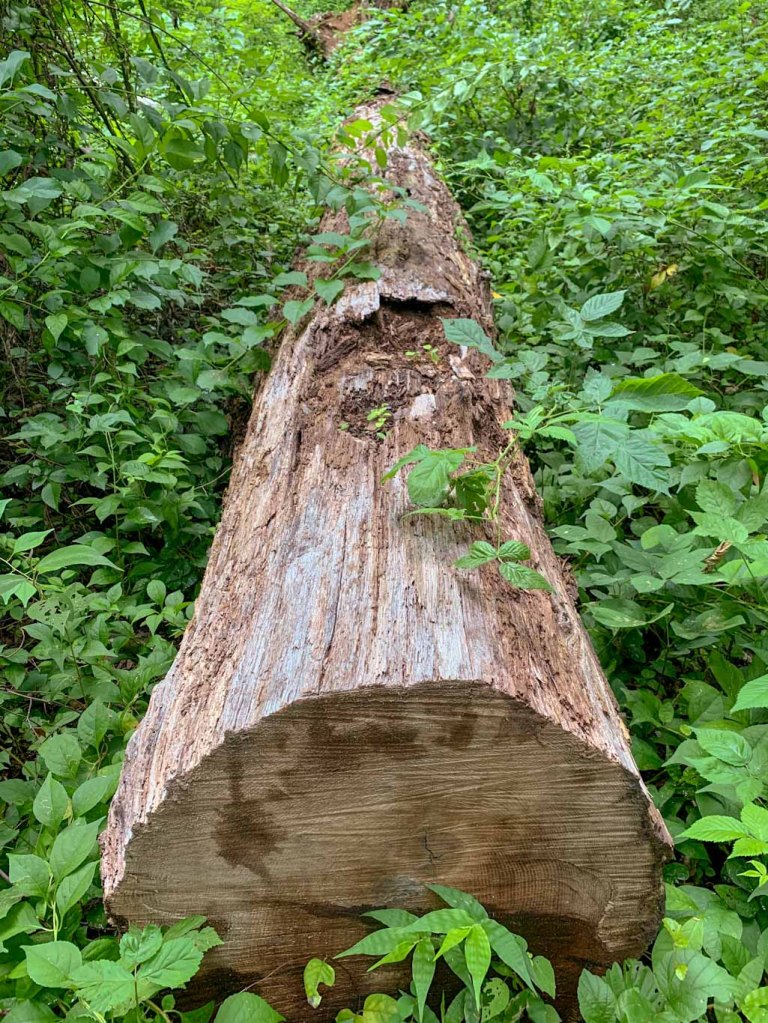
Fallen tree that was cut to remove from trail

What do dead and decaying trees provide?

  • Roosting spot for birds such as woodpeckers
  • Main home for bugs like ants, beetles, wasps and bees. Dead logs are also prime homes for larger critters like salamanders, frogs, and even snakes. Some scientists estimate that dead wood provides food and homes for more than 40% of forest wildlife species!
  • Form the bottom of the food chain for detritivores (organisms that feed on dead material) like fungi and bacteria which are then consumed by other animals
Fungi growing on decomposed log
  • Prevents erosion by reducing stormwater runoff. Logs in running water also prevent bank erosion, as well as trap sediment so that it doesn’t flow any further along.
  • Replenishes nutrients in the soil. Research has shown that trees are the main source of organic material in soil!
  • Plays an important role in forest regeneration. Not only does a fallen tree open up the canopy and make room for new trees, they also can become an extremely fertile growing medium for seeds and seedlings that have gathered there.
  • In ponds and streams, downed trees serve as sunning spots for turtles, fishing perches for birds, and even nests for fish.
Turtles sunbathing on a log

I think it’s pretty clear that dead tree are essential to the forest ecosystem! Now some people might be wondering about dead hazards and that’s a good point! Dead trees, especially snags can be seen as a fire hazard. And with wildfires constantly in the news, it’s definitely something to be concerned about! But remember, some wildfires are natural and can even be good for the ecosystem. There are certain species of plant that even need fire in order to germinate! However, if you have a dead tree on your property, you should get it removed. Dead wood is still a fire hazard and also a falling hazard especially near homes and people. Leave the dead wood to the forest!

Dead and decaying trees form an important part of a forest’s ecosystem. That’s why they are often left on the forest floor in parks. It doesn’t mean that the park isn’t well taken care – quite the opposite actually! Next time you pass a decaying tree, just think of all the life that could be starting a new inside of it.

Sources:

https://www.thewildlifenews.com/2018/12/20/the-ecological-value-of-dead-trees/
https://www.fs.fed.us/pnw/sciencef/scifi20.pdf
https://www.americanforests.org/blog/nurse-logs-healers-forest/
https://www.nnrg.org/habitat-piles/
https://woodlandfishandwildlife.com/wp-content/uploads/2019/12/Family-Forests-and-Wildlife_What-you-Need-to-Know_reduced.pdf
https://dnr.maryland.gov/streams/Publications/WoodyDebrisForWeb.pdf

Liberty Reservoir & 1623 Brewing Company

Eldersburg, MD

Liberty Reservoir is one of those amazingly peaceful places that I am more than happy to drive over an hour to visit. But I’ll be honest that it was originally 1623 Brewing that brought me to the Eldersburg area. When I’m on the hunt for a new Hikes & Hops, I actually start with a brewery and then find out what trails are nearby. Finding Liberty Reservoir was my lucky day since it has quickly become one of my favorite hiking spots in Maryland. Not to mention that 1623 Brewery is worth the drive in their own right! They have excellent beer and a HUGE space with lots of indoor and outdoor seating. They never disappoint. So let’s get to it!

THE HIKE: Liberty West-Morgan Runs Trail (Includes Coots Peninsula) 

Length: 7.3 miles
Elevation Gain: 987ft
Difficulty: Moderate 
Time: ~3 hours
Trail use: Hiking, biking, dogs
Parking: Lot on side of busy road so be careful when parking
H&H: 4/5

Liberty Reservoir is pretty big and there are no shortage of different trails you can take. My absolute favorite hike here is Coots Peninsula, so much that I hardly ever try anywhere else in the park! If you’re looking for a shorter hike than this, just the peninsula loop is about 4 miles and starts at the end of Bollinger Mill Road. J and I have been wanting to build up to longer hikes so we chose this extended loop that starts from a parking lot off of 32. Please be careful when pulling in and out of this space, there are some blind corners and it’s a major road. 

Although many of these trails are listed as “heavily trafficked” in the AllTrails app, every time I’ve been here it’s felt so peaceful and I hardly ever see anyone else. The highlight of this area really is the reservoir with its sparkling clear waters. The Reservoir is owned by the city of Baltimore and brings water to nearly 1.5 million people in the city and surrounding suburbs. It wasn’t always a lake though and in 1954 the city made a LARGE purchase of the land. It had once been a thriving mill town and after all of the buildings were abandoned they were left intact and the reservoir just filled in around them. Kinda spooky to think of factories and houses just sitting under that pristine water! 

Anyway, now the reservoir is perfect for hiking, especially since only paddle boats are allowed on the water, so you feel miles and miles away from civilization. Coots Peninsula is particularly beautiful as you are surrounded by water as you walk through the pine woods. The point at the end of the peninsula was really stunning with some of the clearest water I’ve ever seen! No swimming is allowed but we bent the rules and dipped our feet in. I’d call this trail moderate since the loop back had quite a few steep hills which I really enjoyed! If you go in the summer, make sure to bring plenty of bug spray! Even with it, at times the gnats and flies got pretty annoying. This has definitely been a favorite spot of ours and we’ve been back a few times! 

THE BEER: 1623 Brewing Company 

Address: 5975 Exchange Dr Suite H-L, Eldersburg, MD 21784
Distance from Trail Head: 4.3 miles, ~8 mins 
Website: https://1623brewing.com/
Food?: Snacks and Food Trucks (Everyday) 
H&H Rating: 5/5

1623 Brewing has been brewing since 2018 but only opened their brand new taproom in February 2020 right before all of the ‘rona shutdowns. But it never seemed like it held them back because their brand new facility was AH-Mazing! We were so impressed with the amount of seating available and the living room vibes. We settled in on their patio under a pergola which was so inviting and kept the sun from frying us. Although they don’t have a kitchen, they do have food trucks every day that they’re open. Score! But the most important thing: how was the beer?! 

We were really excited to finally get some 1623 on tap, having had cans of their Dry Irish Stout in the past (Go get it, it’s delicious). Everything we had on tap was great! I didn’t get it this time around, but my favorite 1623 beer is their Hefeweizen. It’s the brewer’s specialty and really it shows. It’s quite honestly the best hefe I’ve had on draft! This time around I wanted to have a sour since it was hot and muggy out. Dang, this was the sourest sour I have ever had! Still delicious though with a subtle passionfruit flavor. J opted for the Ella Mental Lager which was part of a series of Single Hop Single Malt lagers. I’m always really into SMaSH series because I love to learn more about beer ingredients and to single out flavors. This one was made with Australian Galaxy hops and was quite refreshing. They also made a version conditioned on spruce tips that my nature heart desperately wanted, but I know I don’t like sprucy beers so we passed on that one. Oh and we got a 6 pack of the pilsner to take home as a porch beer. 

(Also I’ve been having a moment with pilsners? So underappreciated and yet it’s one of the harder styles to make! Yup, I’ve already got plans for a pilsner appreciation post for one of my beer bytes soon!) 

Another thing I really appreciate about this brewery is all of their glassware. No basic pint glasses here! They’ve got all of the proper glassware for the style of beer! Ah, it’s the little things. 

Our Beer:

  • Tart Attack – Sour – 3.1%
  • Ella Mental – Lager – 6.4%
  • Pilsner – Pilsner – 5.2%

SUM UP: Liberty Reservoir has a variety of trails and the Coots Peninsula Loop is particularly beautiful and is of moderate difficulty. There is ample off-street parking at the trailhead. While the water views are beautiful, be prepared for mud and bugs. Nearby is 1623 Brewing Company which always has rotating food trucks and plenty of indoor and outdoor seating. It’s a perfect combo!

Nature Nugget – July 21

“Of all the paths you take in life, make sure a few of them are dirt.”

John Muir
Pine Grove in Seneca Creek State Park

Guys I wanna take a sec to talk about trail etiquette. Since the onslaught of COVID-19 there are more people than ever interested in hiking (YAY)! But I’ve also been seeing a lot of bad trail etiquette (BOO). So I want to talk a little bit about what to expect in the woods and how to be a good neighbor to your fellow nature-lovers, including plants and animals.

  1. Leave. No. Trace – Guys, if you forget everything else from this post please please please remember this one thing. Everything you bring has to leave with you. Some things are obvious, like don’t leave an empty water bottle or a plastic food wrapper. But remember, you also shouldn’t toss an apple core. But wait, you think, isn’t that composting? NO. You are introducing something unnatural to the environment and that could have bad effects. Not to mention that now people that come after you have to smell your rotting apple. I like to pack an extra plastic grocery bag in my daypack to put any trash in!
  2. Right of Way – Yup, just like on the road. If you need to yield step carefully off the trail, being aware of plants and animals nearby. It’s usually better to step downhill. Now this might vary trail to trail based on usage but generally:
    • Hikers going uphill have the right of way
    • Bikes yield to hikers and horses
    • Hikers yield to horses – always step slowly to the side so not to startle the horse. If coming up behind a horse, make yourself known to the rider and animal.
  3. Make Yourself Known – it’s always nice to greet a fellow hiker plus it’s great to not be startled by someone coming up behind you. I try to say hello to everyone I see on a trail and I’m always surprised how few reciprocate. It’s always good to foster a friendly trail atmosphere.
  4. Stay on trail – going off trail can hurt the local plants and animals. You’re in their home, don’t mess it up! In this vein, it’s better to walk through a puddle or mud. Widening trails like that is bad for sustainability. If it’s rainy or muddy, maybe leave the hiking for another day!
    • If you have to go off trail to relieve yourself (it happens), make sure to be at least 200 feet away from the trail and any water sources. Leave No Trace applies to toilet paper too!
  5. Leave Wildlife Alone – Don’t try to approach animals, this could be potentially dangerous to you and also hurt the habitat. Animals want their space too! Also don’t feed the wildlife, this disrupts their foraging habits and wrongly teaches them that humans provide food
  6. Enjoy the Quiet – Nature is so peaceful and nothing ruins it more than a loud group or someone playing music. Personally, I only use my phone for taking pictures on the trail, but just bring headphones if you want to listen to something. Just be cautious of your surroundings and only ever have one headphone in at a time! Remember, you don’t want to ruin someone else’s peaceful hike.
  7. Pets – If bringing your furry friend, always keep them on a leash. Make sure they can stay under control if you encounter wildlife! And bring bags to carry out pet waste. Aside from litter, nothing enrages me more than dog poo on the trail! C’mon people!
  8. Be Prepared – This may sound self explanatory but seriously make sure you know what you’re getting into!
    • Wear proper clothing for the trail conditions. Bring a jacket if the elevation changes a lot, or a rain jacket if you anticipate precipitation. Wear the right shoes and have crampons if it’s snowy or icy
    • Look over the trail map before heading out and know approximately how far you’re going. If applicable, know what trail blazes to follow
    • Bring plenty of water! Yes it’s heavy but when you’re hiking sometimes you don’t even realize that you’re getting dehydrated until it’s too late! I bring a huge bottle with me and also leave some in the car
    • If you’re going for a long hike, make sure to have some snacks to keep you going. We almost always pack a lunch to have during our hike.
    • Check the weather before you leave! Weather conditions can change so quickly and you don’t want to get caught outside during severe weather
    • Let someone know where you’re going, especially if you’re hiking alone

At the end of the day, respect is the key to trail etiquette. Have respect for other hikers and for the plants and animals whose home you’re visiting. Now get outdoors!

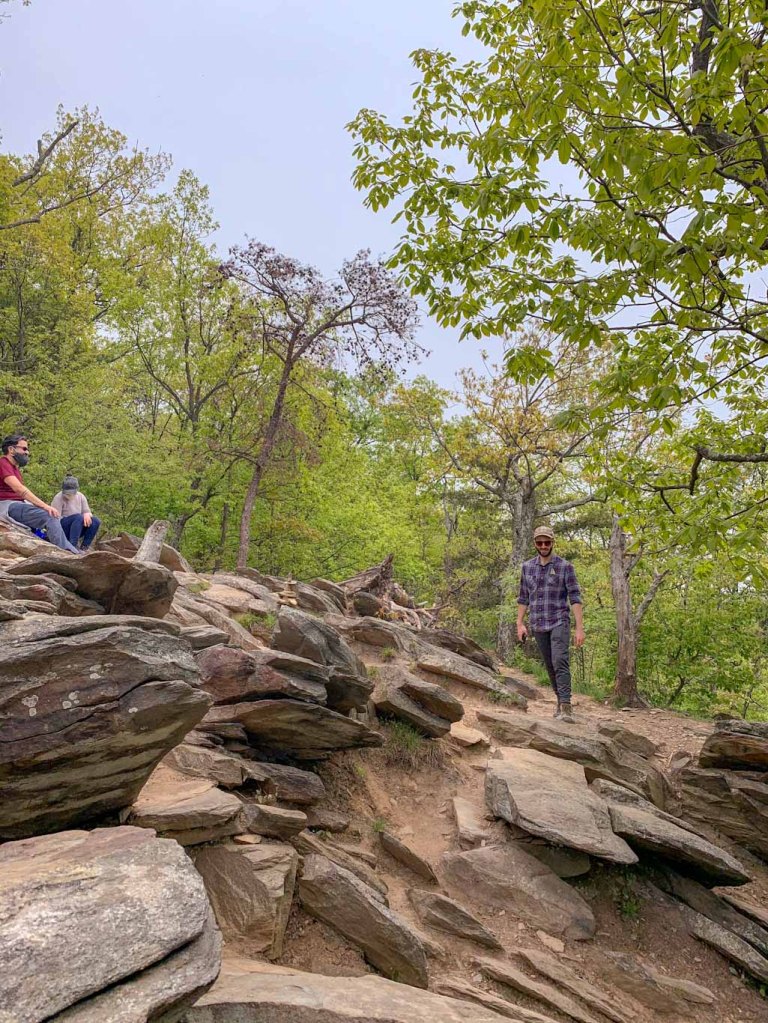
King and Queen Seat at Rocks State Park
Weverton Cliffs

June 23 – Nature Nugget

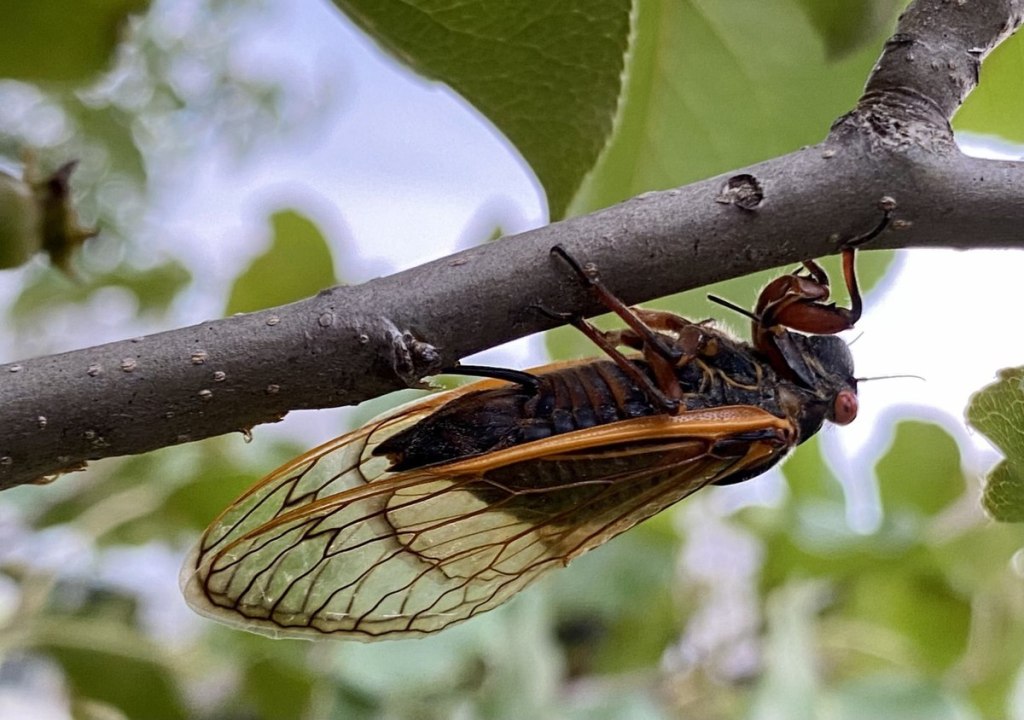
If you’re like me, your life has been plagued by the Brood. Brood X to be exact. Now I’m sure everybody is sick of hearing (literally) about cicadas but I wanted to use my first Wednesday Nature Nugget to talk about the aftereffects of those pesky bugs.

Source: Wikipedia Creative Commons

So luckily in my area of Maryland, we’re finally past the peak of cicada activity and now are mostly dealing with the carcasses littering every spot of sidewalk. Although the sound was unbelievably loud, personally I didn’t find the cicada too bothersome. Except for that morning when I woke up the buzz of ELEVEN on my window. However, I have been wondering about their effect on the trees that just a few weeks ago ago were being swarmed by them.

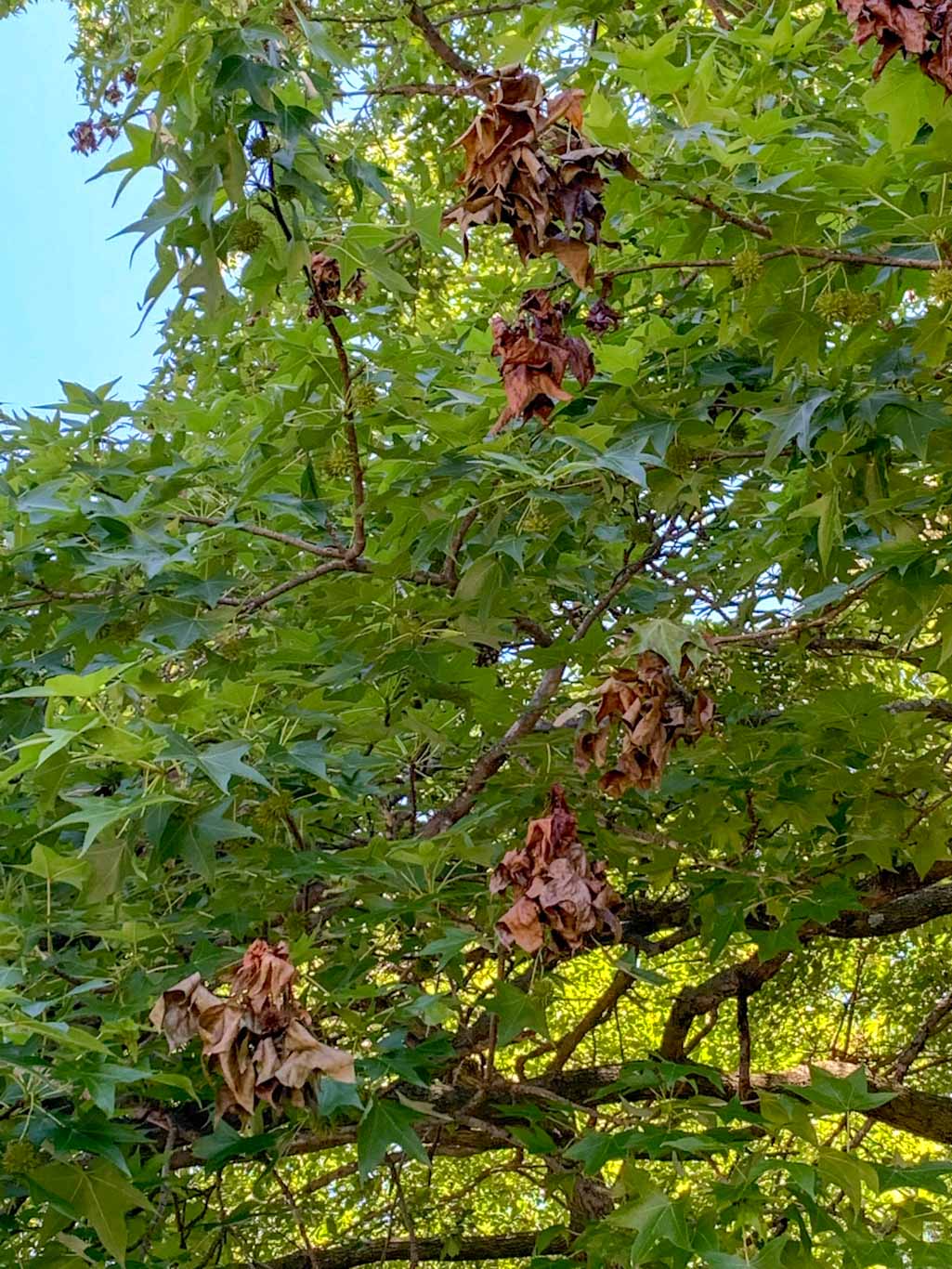
Just on walks around my neighborhood, I’ve been noticing a lot of brown spots in the trees, mostly at the ends of branches. There’s been a lot of leaf dropping, some days making me wonder if it’s October, not June. Some quick research finds that this is a phenomenon called “flagging” and, you guessed it, Brood X is the culprit. When the females lay their eggs, they use their ovipositer (literally egg- placer) to gouge a slit in a branch and lay their eggs. If there are too many slits in a single branch, it may hang down from the tree and eventually break But never fear! Think of this as natural pruning. Pruning encourages new growth, so while things may look a little rough this year, flagging is helpful for the tree in the long run! However, extensive flagging on young trees can be harmful.

This newly planted tree could be more susceptible to cicada damage

Other fun facts about cicadas:

  • They aren’t picky about their trees! Cicadas are known to lay eggs on over 200 types of trees. They don’t seem to like evergreens though.
  • During their seventeen years underground, baby cicadas (nymphs) feed on tree roots and undergo 4 molts!
  • large groups of buzzing cicadas can reach 100 decibels

I dunno about you, but I think I can wait another 17 years to see these guys again! I hope you liked this Wednesday Nature Nugget. Let me know if there’s any other topic you’d like to learn!

Happy Wednesday!

Sources:
https://extension.umd.edu/resource/cicadas https://www.udel.edu/udaily/2021/june/cicadas-17-years-noise-northern-delaware-molting-shells-mating/