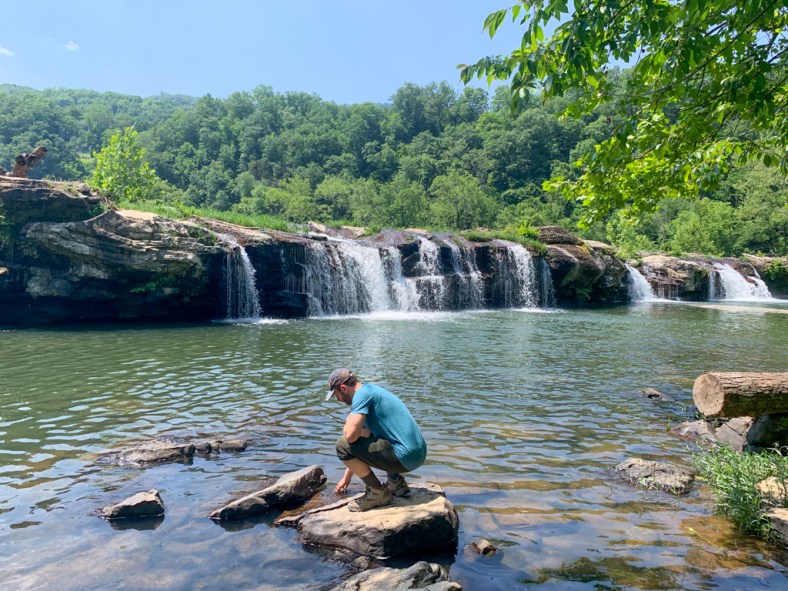
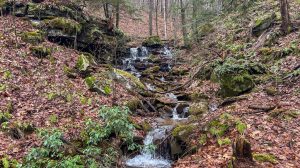
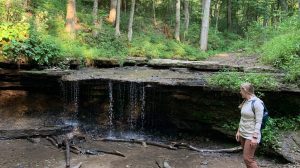
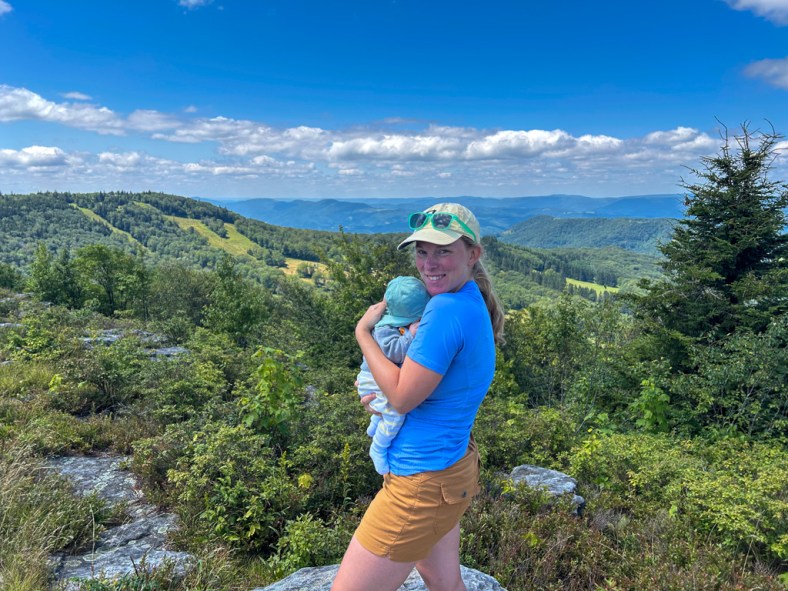
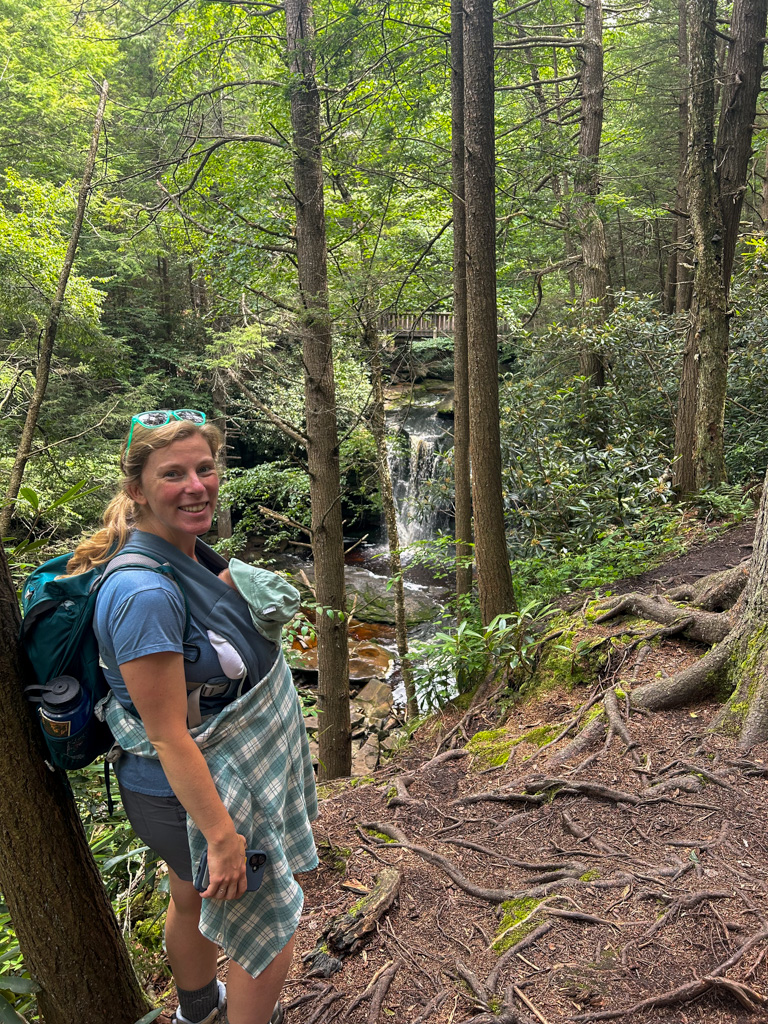
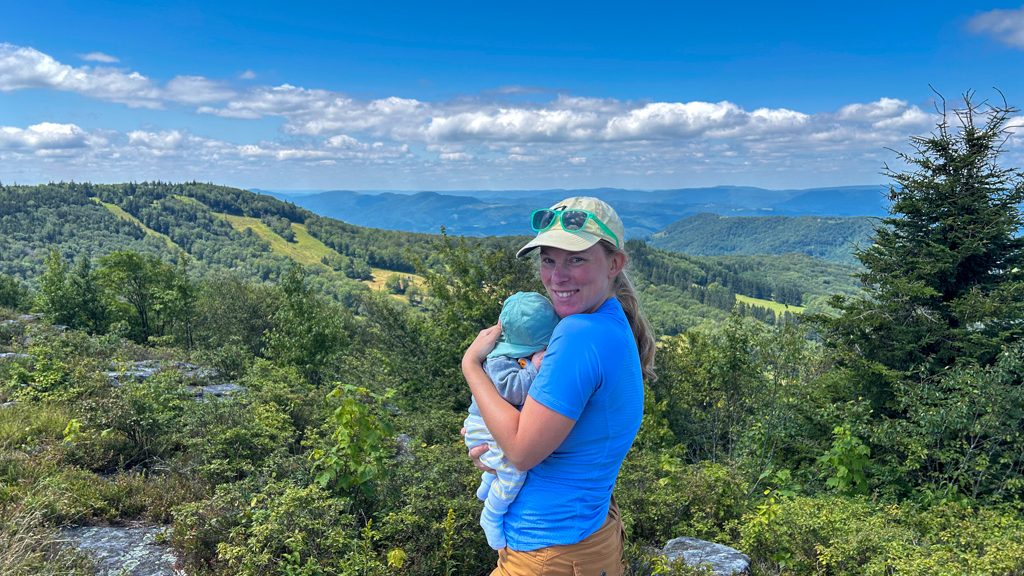
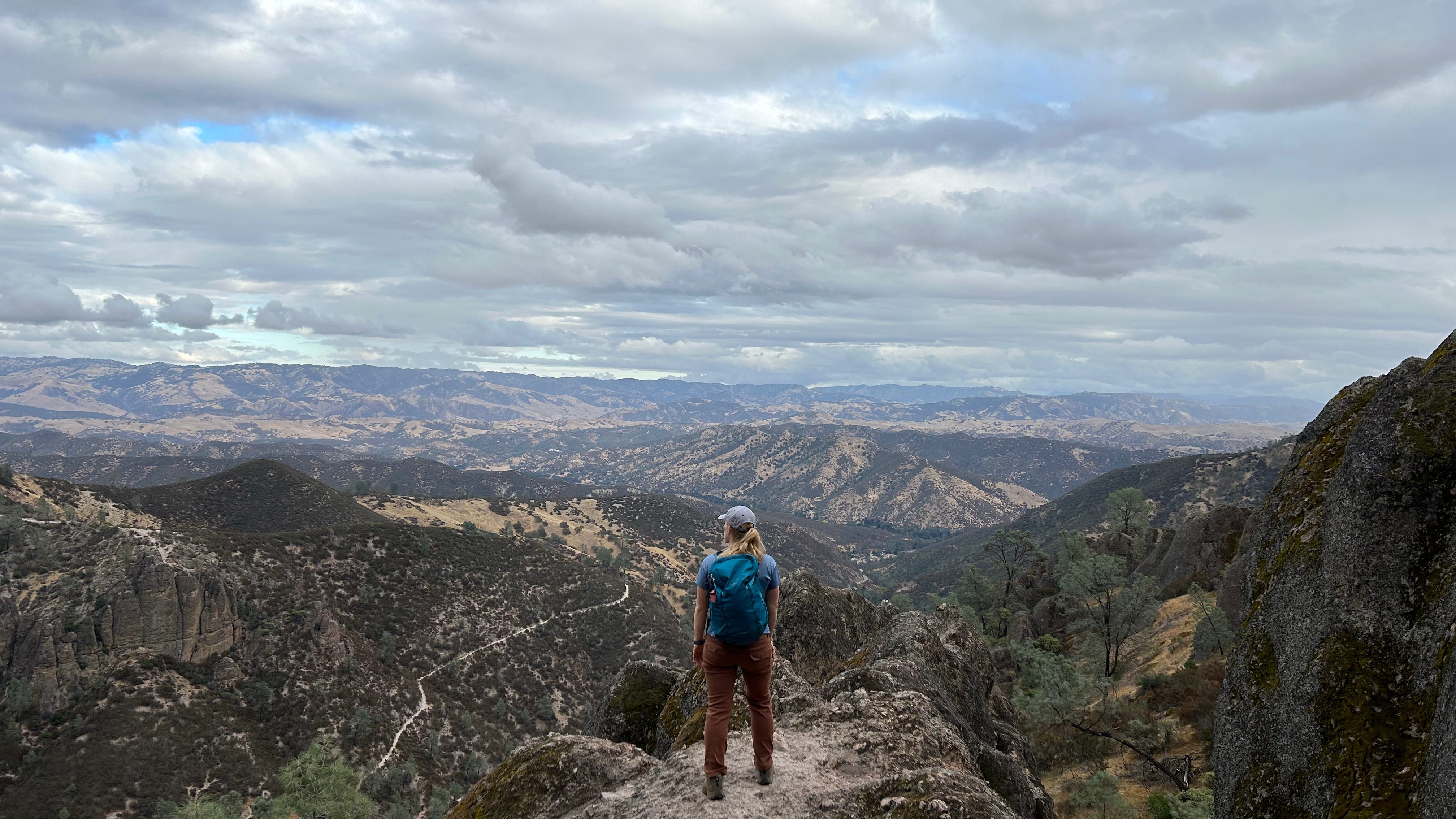
One way to stay cool is to hike near water, like this hike at Sandstone Falls in New River Gorge National Park in West Virginia
It’s a heat wave! But does that mean you should take a break from the great outdoors? Not necessarily! Read below for some tips to safely enjoy the trails during the dog days of summer.
I’m not a medical professional, so please be sure to do your own research and talk with your doctor if you have any concerns about recreating safely this summer.
This post contains affiliate links, meaning I get a commission if you decide to purchase something. I have only shared links for items I have personally tested and would recommend. All income I may receive goes back into hosting and running this site!
It’s all in the Timing
The heat tends to peak between 12-4pm so try to time your hikes for early or late in the day. Just remember that bugs and especially mosquitoes tend to peak in the evening, so you’ll need plenty of bug spray. Anytime you’re hiking in the dark, make sure to have a flashlight or headlamp with extra batteries.
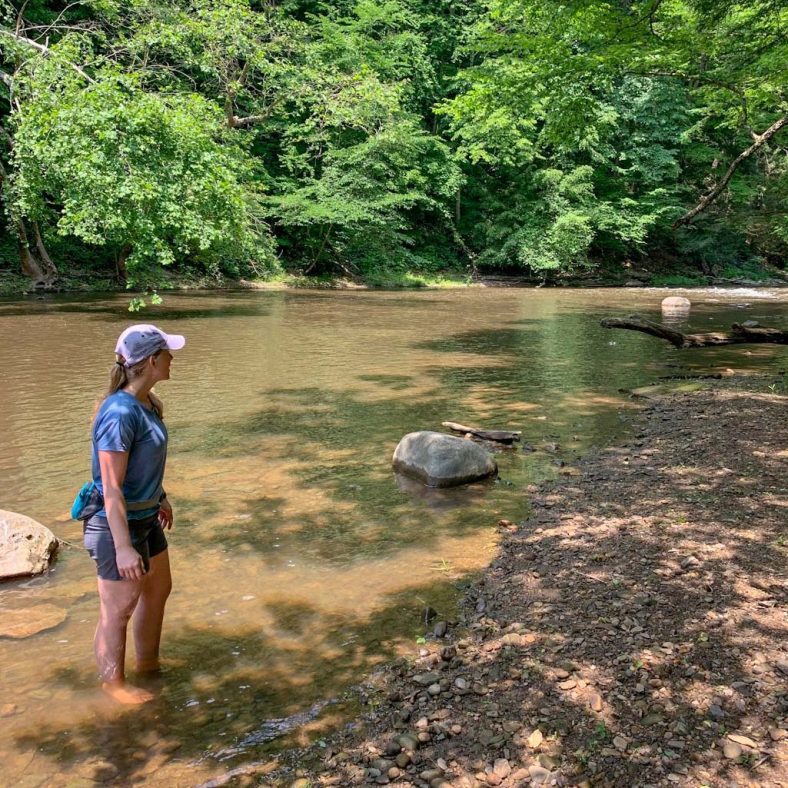
A refreshing post-hike dip in the creek
Pick the Right Hike
Pick a hike that has lots of shade. This is not the time for a grassy meadow hike! Bonus points if it’s near water and you can catch a cool breeze. If the heat index is really extreme, consider doing a shorter hike or one without much elevation. The best hikes are the ones that end with a spot to cool your feet off!
Pack Plenty of Water
Water is probably one of the heaviest things in your pack, but it’s necessary in the heat of summer. Each liter of water is 1 kilogram (2.2 pounds). Consider putting it in a hydration bladder to make it easy to access. Also, leave a jug of water in your car so you have plenty for the ride home. Be sure to drink water throughout your hike, not just when you feel thirsty. If you notice that you’re sweating a lot, you might need to add some electrolytes to your water to refuel!
Cover Up
It may seem counterintuitive, but it’s actually better to cover more of your skin to protect from UV. Invest in some sunshirts that protect from the sun’s rays and opt for fabrics that are moisture-wicking (like merino, nylon, or polyester). Cotton, while breathable, retains moisture, so it’s particularly bad for hot, humid days and excessive sweating. I like these Active Pursuit shirts by REI. Don’t forget to protect your eyes by wearing sunglasses! Also, a wide-brimmed hat does wonders to protect your head, neck, and ears.
Wear Sunscreen
Hikein the evening to avoid the heat of the day
Always wear sunscreen even if it seems like a cloudy day. The sun’s UV rays are extremely strong! Pay special attention to sensitive skin on your face and neck. You’ll need to reapply every few hours if you’re sweating a lot or if the sunscreen gets rubbed off by your pack straps.
Keep Snacking
Sometimes eating is the last thing you want to do when feeling hot, but it’s important to keep your energy up on the trail. Be aware of how much you are sweating and try to eat small snacks to replenish your energy stores. Be careful of having too many salty snacks, as they will make you even thirstier! I like an energy bar like Katie’s Real Food or Honey Stinger Waffles. Even a couple of bags of kids’ fruit snacks are a great energy boost!
Know when to stop
Know when to listen to your body and stop. Whether it’s taking a break or turning around, it’s better to be safe than sorry. If you’re feeling fatigued or are halfway done with your water but not halfway done with the trail, don’t push through. Heat exhaustion can creep up very quickly, so listen to the signs of your body and know when to call it quits.
If you notice any of these symptoms, stop hiking and get help, as you could be experiencing heat stroke:
Sudden stop in sweating
Nausea or vomiting
rapid breathing or heart rate
slurred speech or trouble concentrating
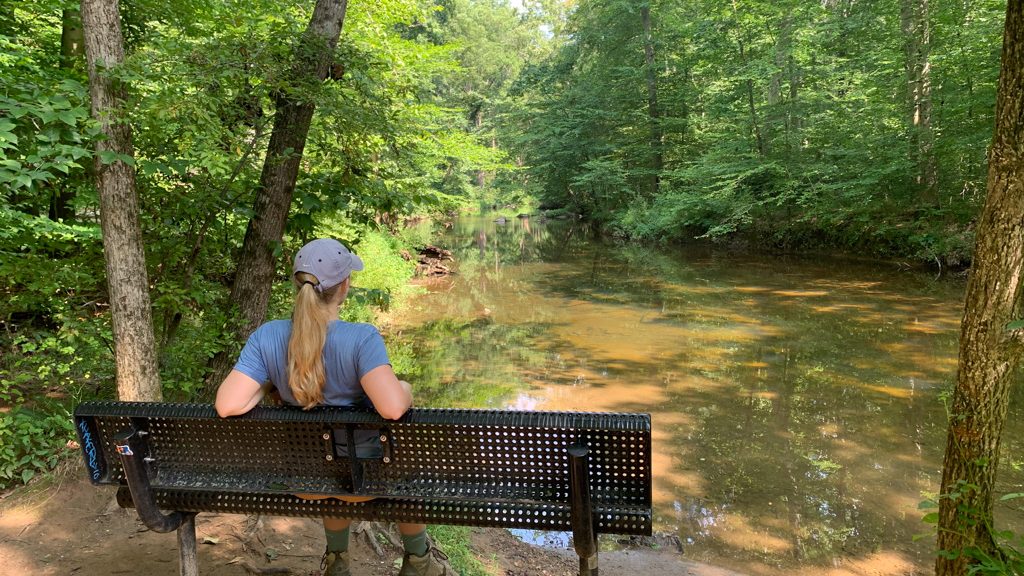
On a hot day, take plenty of rests like I did at Ridley Creek State Park in Media, PA
Congratulations! You’ve made it through the endless trips to the bathroom, excruciating heartburn, tiny fists punching your ribcage, and the many other delights of pregnancy. Now you’re wondering about getting back into hiking with your little one. This guide is for parents (moms or dads!) wanting to start hiking with their newborn (0-3 months old). Getting my little one outside was one of the greatest joys of the postpartum time, but it was very daunting to start out. In this post, I’m sharing all of the things I wish I had known before getting out there, along with some of my essential gear.
First weekend trip with baby at 7 weeks old
Disclaimer: I’m not a medical professional, so always check with your doctor first to make sure that hiking is still considered safe, especially if you have any complications.
This post contains affiliate links, meaning I get a commission if you decide to purchase something. I have only shared links for items I have personally tested and would recommend. All income I may receive goes back into hosting and running this site!
General Tips for hiking with kids of any age:
Choose the right hike. Keep your kids’ abilities in mind and start small before building to longer hikes.
Be flexible and know when to quit a hike that isn’t working.
Keep everyone fed and hydrated. Pack more snacks and water than you think you need. Take care of kids’ needs, but also make sure you are staying hydrated and fed enough so that you can care for everyone.
Always let someone else know where you are
Keep an eye on the weather
Hiking with a Newborn
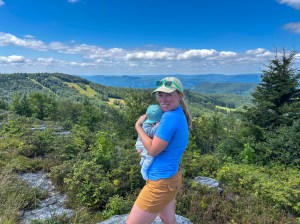
Baby’s first hike, a short local hike on a mostly flat path
Let Yourself Heal
If you are a birthing parent, no matter how you delivered, your body went through something massive, and it might take a while until you’re ready to hit the trails again. Most physicians suggest waiting until 6 weeks postpartum before getting back into exercise, but you may need more or less! Stay in communication with your doctor and stop any exercise if something doesn’t feel right. In the first few weeks, focus on gentle stretches and short walks to build up your strength again. I was definitely guilty of getting out there a bit too early and had some rough back and hip pain as a result!
Practice Babywearing
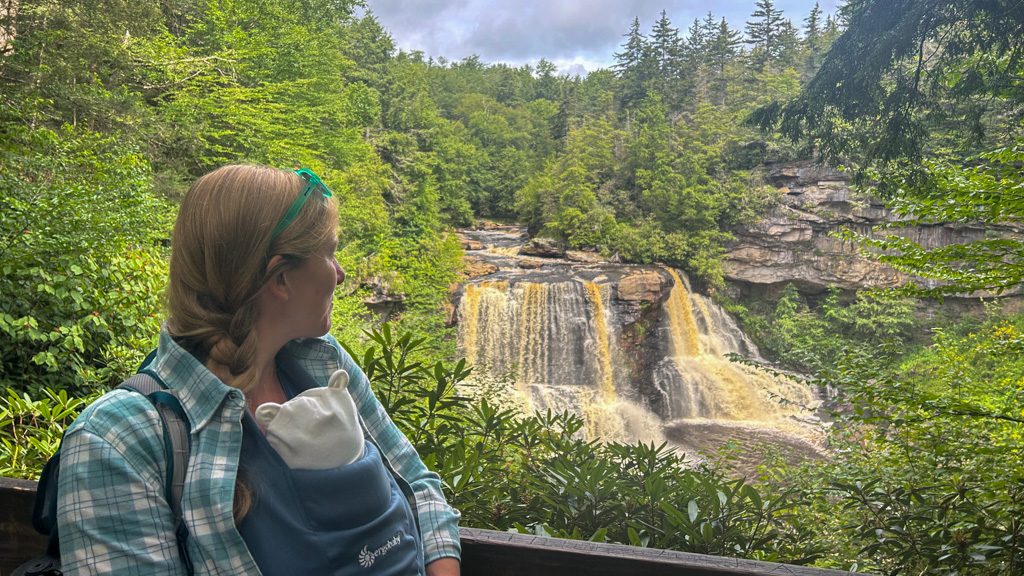
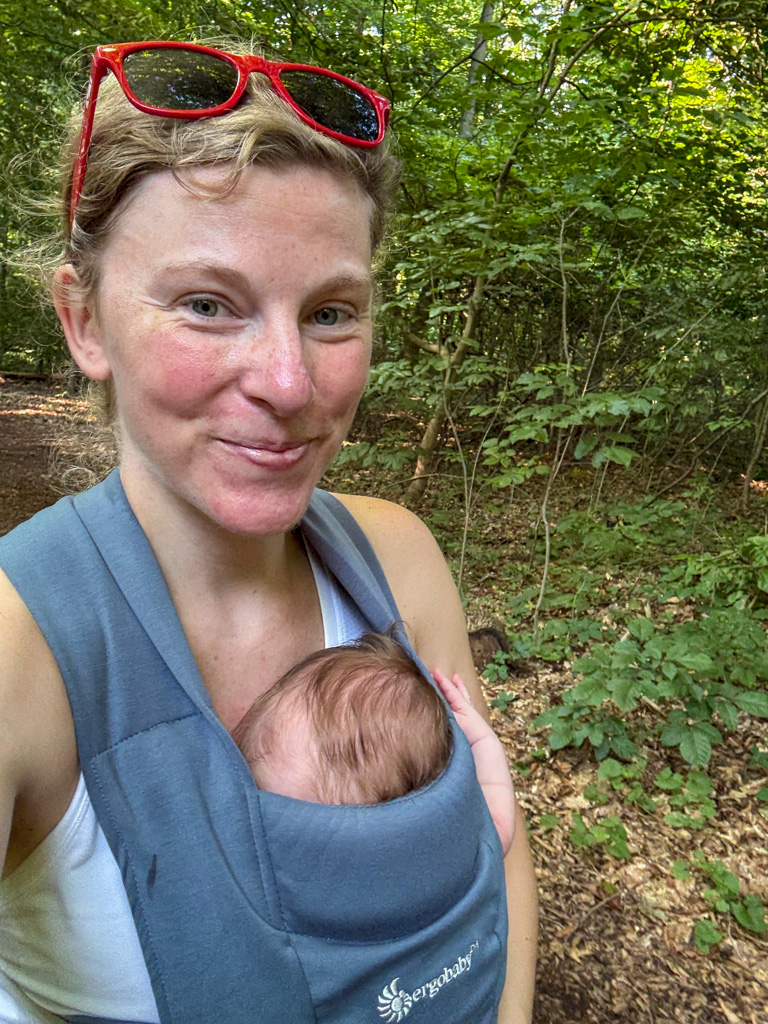
Babywearing is key to getting out on the trails with your newborn. There are so many different options for wearing your baby, including wraps, ring slings, and structured carriers. Personally, I found a structured carrier to be the best option for hiking. I used the Ergobaby Embrace, a knit carrier specifically made for newborns, but can be used up to 25lbs. I liked this carrier because it was easy to get on and off, adjustable for both parents to wear, and machine washable.
It can take a little while for both you and the baby to get used to babywearing, so practice around your house and on short walks before heading to the woods. It took me a while to get the hang of putting the carrier on myself! Make sure to follow all of the manufacturer’s instructions for proper wearing so that you and your baby are safe. You should always be able to see baby’s nose and be able to kiss their head. Their legs should be in an “M” shape, and the bottom strap should sit on your natural waist (across your belly button).
TIP – Baby carriers can get expensive! Check your local kids’ consignment stores, Facebook marketplace, and Buy Nothing groups to get some options to practice with!
Don’t be discouraged if your baby is fussy the first few times in the carrier. Just like the stroller and car seat, it can take some time for your baby to get used to the feeling of being in the carrier. Keep testing it out with short walks and figure out what your baby needs to be comfortable.
Manage Body Temperature
Babies are mini furnaces. Seriously, it is shocking how warm they are, especially when strapped to your chest! You will have to dress and layer differently than you typically would if only hiking with a backpack. In the summer, make sure to wear light, breathable layers on both you and the little one. In the winter, wear one less layer than you typically would (but keep baby nice and warm). Be aware of your own temperature and make sure to take breaks to cool off or warm up if needed.
I had my baby in the summer, and I was so shocked at how sweaty I got hiking with her! I always ended up hiking while holding our stroller fan, which kept us both cool and kept the bugs off (bonus!)
Even in the summer, keep baby’s screen protected from the sun.
Hydration is Key
I’m a pretty seasoned hiker, so packing water for a hike is nothing new. But oh man, was I unprepared for how much water you have to drink while breastfeeding. Now, combine that with a tiny furnace on your chest and the summer heat. Yeah, I learned pretty quickly to bring twice as much water as I usually do, plus extra in the car for after the hike. Just remember that more water = more weight. Water in a hydration bladder makes it easy to take sips as you go!
Nurse or give a bottle frequently so that your baby also stays hydrated. Since breastmilk or formula is their only source of liquids, they can dehydrate very quickly when outside in the heat!
Feeling Shady
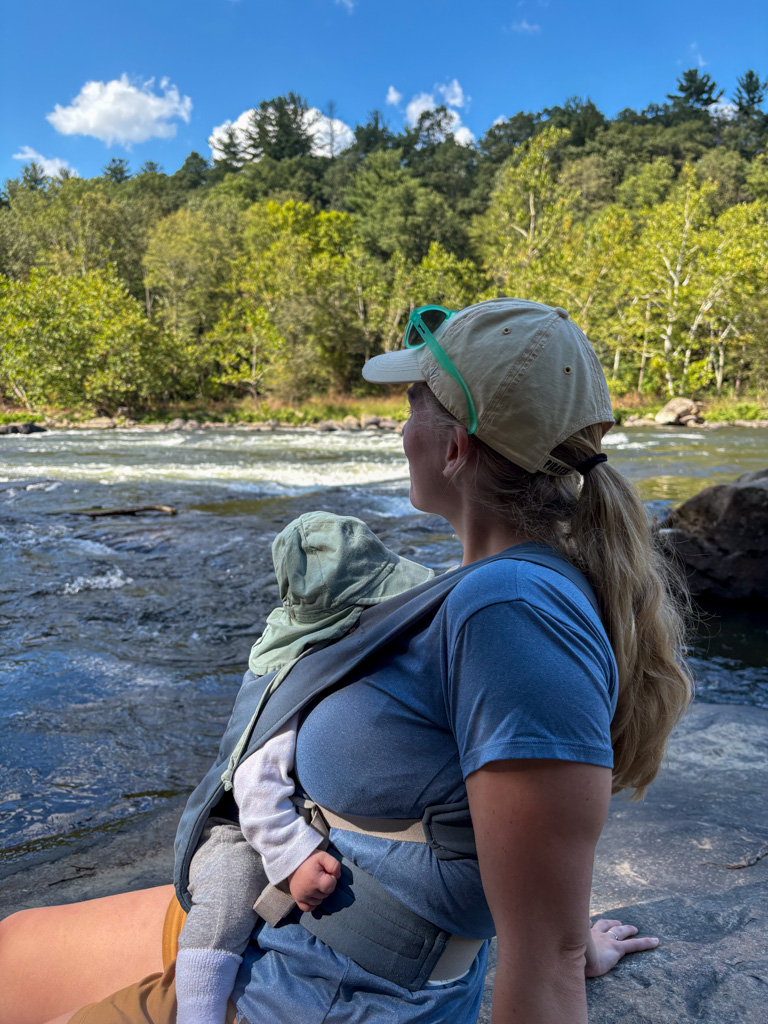
Babies can’t wear sunscreen. WHAT! I had no idea that doctors recommend avoiding sunscreen until babies are 6 months old. So, to hike with a newborn, make sure that their sensitive skin stays out of direct sunlight. Opt for trails that have plenty of tree cover. Dress your baby with long sleeves and pants, opting for non-cotton fabrics where possible. Make sure they have booties or socks and a sun hat. I also tried to wear a hat with a brim to cast more shadow. Pro tip – attach baby’s sunhat to a pacifier clip and clip to the baby carrier so it can’t blow away!
Diaper Bag Essentials
It’s likely that your diaper bag has gotten pretty hefty with every possible thing you might need. But you’ll want to have a slimmed-down version for your hike. Carrying water and baby is already heavy enough, so just pack the essentials: a foldable changing pad, diapers, wipes (put a few in a sealable bag), a bag for dirty diapers/clothes, and an extra outfit. Pretty much anything else can just stay in your diaper bag in the car! My little one loved a pacifier, so I brought that on a clippy string too.
Have a Potty Plan
I did a lot of solo hiking with my newborn, and it was the most wonderful bonding experience. It’s still one of the things I miss the most about my maternity leave. However, one of the hardest things for me to figure out was actually how to go to the bathroom! Seriously, one of the things you don’t realize until you’re alone with a baby is how difficult it is for you to relieve yourself if you don’t have access to a family restroom or someone to hand the baby to.
Instead of an expensive carrier cover, tie a shirt around your core for an easily removable layer. Wear a raincoat backwards for rain coverage!
For me, my pee funnel became my best friend. Is it easy to pee while babywearing? Not at all! But it’s better than being limited to only parks that have family restrooms or very short hikes! I also tried to wear clothing that was easy to pull down (ahem, NOT leggings). Do not be tempted to avoid the potty problem by not drinking any water! The last thing you want is to be dehydrated while hiking with a newborn, especially if you are on your own.
The Right Hike
Your first few hikes out with baby aren’t the time to test your limits. Start with an easy hike, maybe something that you’re familiar with. Try to start short and work up your endurance. Try not to feel discouraged if it seems like you’ve lost all of your fitness! It’ll come back with time. Consider also trying a local hike so if things don’t go well, you can easily bail and head home.
Babies Need Breaks and So Do You!
Take plenty of breaks on the trail and give your little one time out of the carrier to stretch and cool off. Depending on the temperatures, I try to take a break at least once an hour to do a diaper change, nurse, and just get a change of scenery. Often, even if my baby was fussing and crying, taking a break reset the clock and gave us another long stretch of carrier time. And something even another nap! These breaks are also a great time to check in with yourself to make sure your needs are met. Have a snack, drink some water, and decide if you need to change your route or take a layer on or off. Hiking with a newborn is not the time to be breaking any trail records, so embrace a slower pace and be kind to yourself.
Bad Hikes
After getting outside with my newborn quite a lot, I was feeling pretty confident! She was generally a pretty happy baby and liked being outside. So, I thought we could tackle a longer hike with a friend. Whether it was colder temperatures or just an off day, my sweet girl screamed for at least 2 miles of that hike. I felt horrible for her and embarrassed by the looks strangers on the trail gave me. By the end of the hike, I felt like a failure and worried that our days of hiking were over.
BUT. We went out again the next weekend, and things were fine! Sometimes, it’s just an off day. Don’t let one bad hike make you think hiking with your kiddo isn’t going to happen. Keep practicing and keep being flexible. It’s hard to get out there in the early days, but it’s so worth it in the long run!
Looking to do your part this Earth Day? Here are some sustainability tips to make your next adventure more eco-friendly. Remember: you don’t have to make big changes to have an impact! Try adopting one or two of these suggestions on your next hike and see how it goes!
Pack Out Trash – Make sure to always pack out your trash, including pet waste, compostables, and food wrappers, especially in areas where trash cans might not get emptied very often. I like to carry a trash bag in my hiking bag to also pick up any trash I see along the trail.
Carpool to Trailhead – If hiking with a group, try to reduce fuel use by carpooling to the trailhead. Bonus, you won’t take up as much space in the parking lot and be less likely to park outside of designated areas
Be a hiking steward – Recreate responsibly! Only park in designated areas and stay on marked trails. Don’t pick wildflowers and let animals be wild. Remember to always Leave No Trace!
Educate Others – When hiking with new (and sometimes even experienced hikers) help them to understand how to be more sustainable hikers and gently remind others of the principles of leave no trace.
Avoid single-use plastics – Whenever possible, try to avoid using wrappers or baggies that you immediately throw away. Opt for reusable sealable bags for snacks, bring water in a metal bottle or hydration pack, and dry bags for keeping electronics and gear dry. Or even just make sure to keep reusing a ziploc baggie!
Repair Gear or Shop Secondhand – As much as we love new gear, sometimes all we need is to repair a tear or get a new zipper. Or if you really need to replace something, try to get it secondhand or check your local Buy Nothing groups. And make sure to donate or recycle old gear!
Shop Local – Another gear one, always shop local for all your hiking needs! Not only does this support the local economy, but you can also have a better sense of where your products are coming from and choose to support businesses that invest in sustainable practices. Plus, it cuts back on shipping materials!
Let’s work together to preserve this beautiful planet for generations to come! Each person can do something small to make a difference this Earth Day!