A Day in McConnells Mill State Park

McConnells Mills State Park spans over 2,500 acres of the Slippery Rock Gorge, a National Natural Landmark. With stunning rock formations, waterfalls, and a picturesque gristmill and covered bridge, this park is worth the drive to Lawrence County, PA. Whether you’re looking to hike the day away or for an outdoorsy spot to bring the whole family, a trip to McConnells Mill is beautiful at any time of year.

  1. Know Before You Go
  2. How to get to McConnells Mill
  3. Hiking in McConnells Mill
    1. Easy Hikes
    2. Moderate Hikes
    3. Difficult Hikes
  4. Other Things to Do
    1. Gristmill Tour
    2. Geology Trail (Driving & Hiking)
    3. White Water Boating
    4. Picnicking
    5. Rock Climbing
  5. Nearby Attractions

Know Before You Go

  1. Free Entry – PA State Parks and Forests are free for all visitors!
  2. 40 miles North of Pittsburgh – but not reachable by public transportation.
  3. Navigation – cell service can be spotty, so download trail and driving maps before leaving home
  4. Pet Friendly – leashed dogs are welcome on all trails. Check below for trail difficulty
  5. No Swimming – Swimming is prohibited at the park due to rocks and rapids
  6. Hunting – Some areas are open to hunting, so always wear orange during hunting season! Check the PA Game Commission for more information about hunting seasons.
  7. Accessibility – Handicap parking is available at the historic gristmill. Please note that there are no ADA-accessible trails or facilities available. Call the park office to confirm accessibility for tours of the mill.
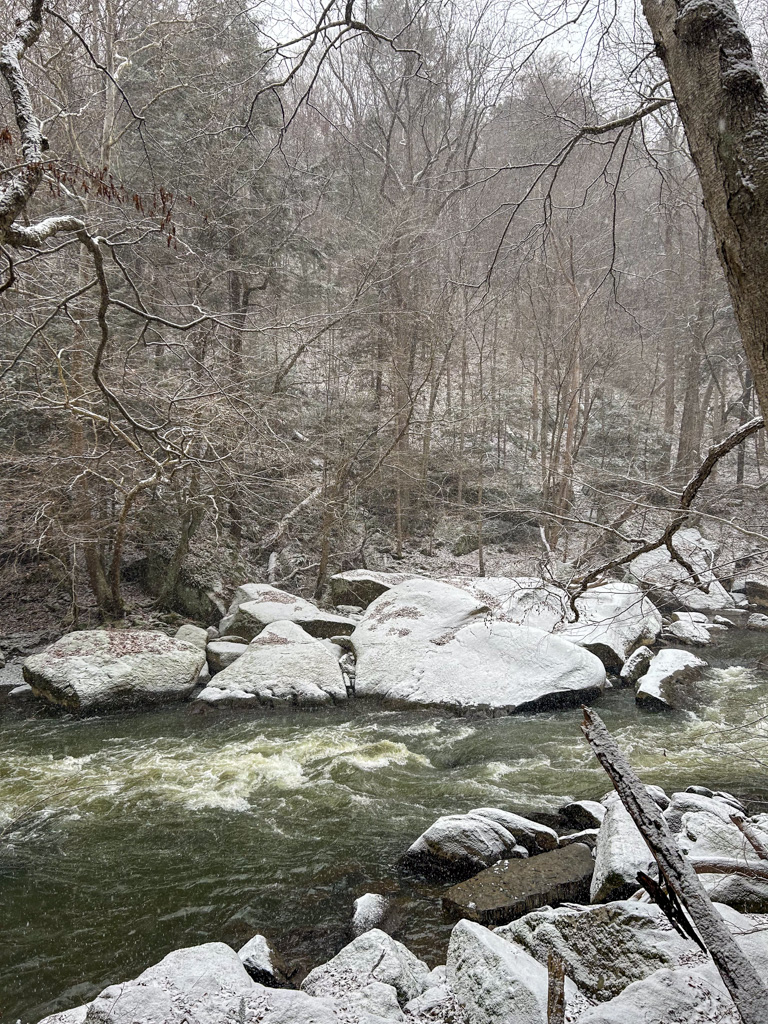
  8. Weather – The park area is often colder than the surrounding areas and is prone to icy conditions. Check conditions before heading out and wear proper gear.

How to get to McConnells Mill

There are a few different parking areas for accessing trailheads at the park. The main parking area is the Kildoo Picnic Area. The park is approximately 40 miles north of Pittsburgh on I-79. Take the exit for PA-488, then get onto US-19N. Then follow Kildoo Road (T316) to the parking lot.
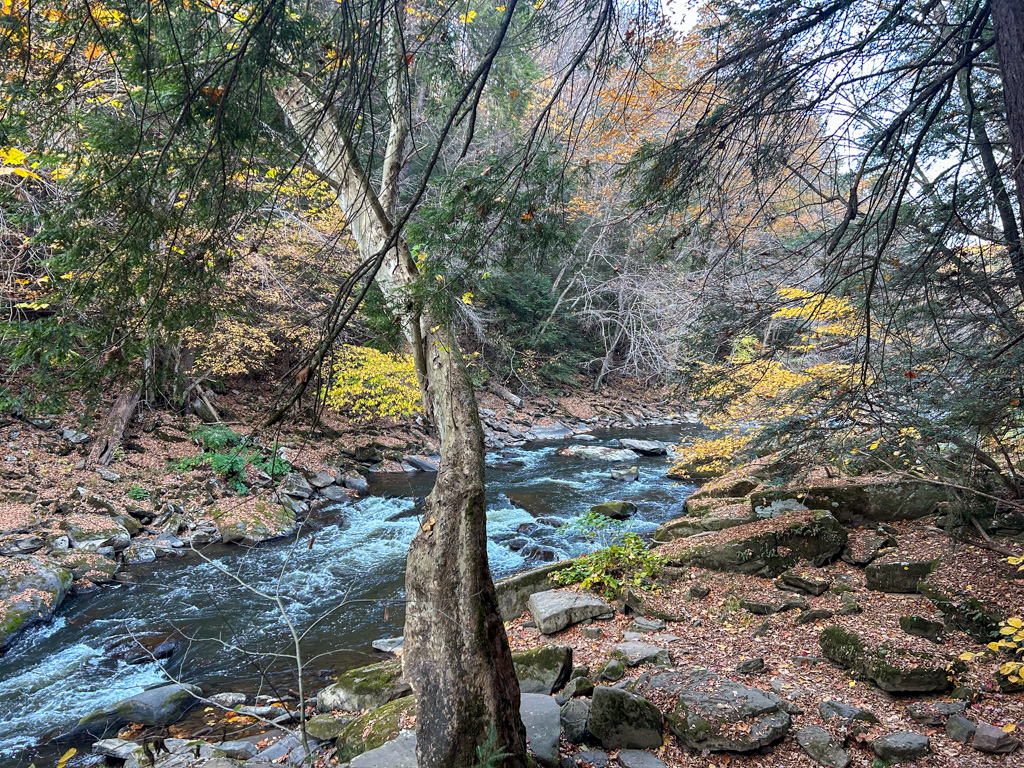
Hiking in McConnells Mill

There are over 11 miles of trail in McConnells Mill, including 7.5 miles of the North County Trail. You can combine trails to make a loop or stick to out-and-back trails. This park has plenty to see without a long hike, so it’s a great spot for families or new hikers. The hardest trail is the Slippery Rock Gorge Trail, which only experienced hikers should tackle. See below for a breakdown of the park’s trails!

Easy Hikes

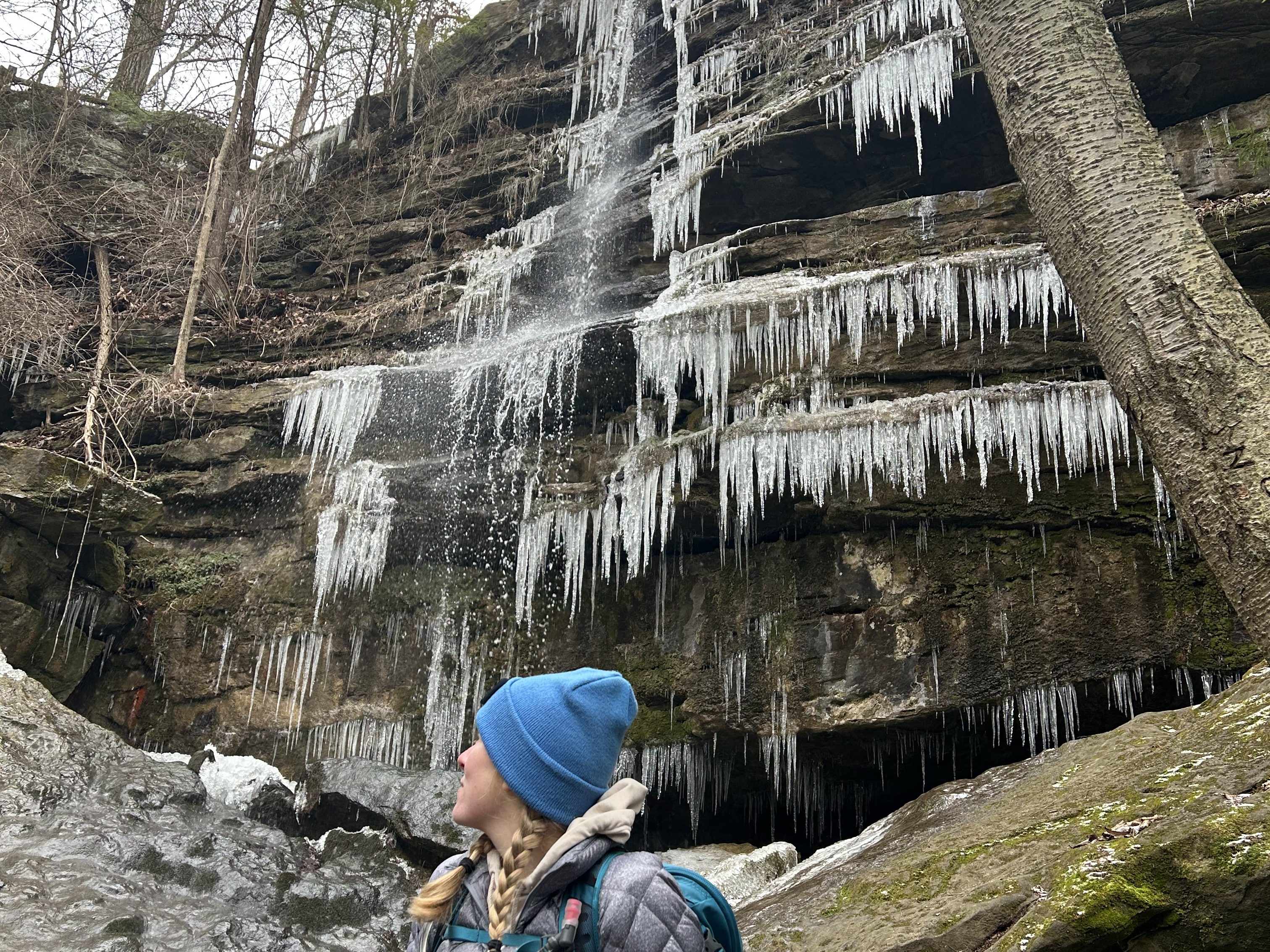
  • Alpha Pass Trail (1.0 miles, out-and-back) – Start at the gristmill and head to the right on the blue-blazed Alpha Pass. The trail is fairly flat and even, but can be icy in the winter. Be aware that the creek is fast-running and not open for swimming. Leads to Alpha Falls, the tallest waterfall in the park, although best visited after a rainy spell.
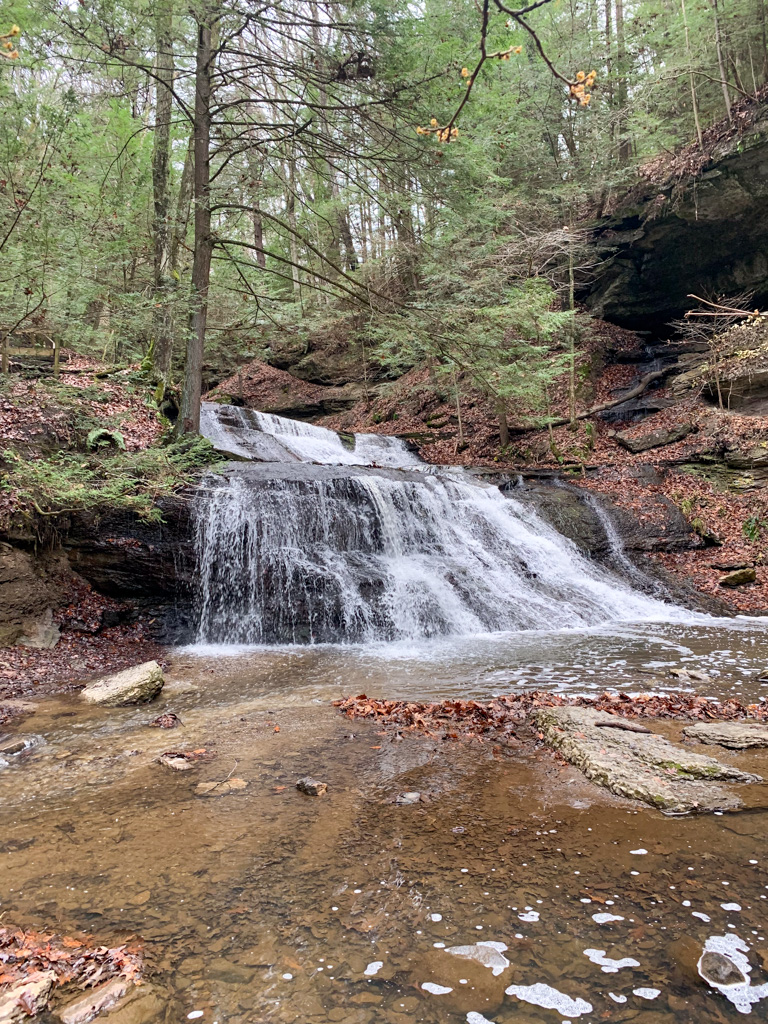
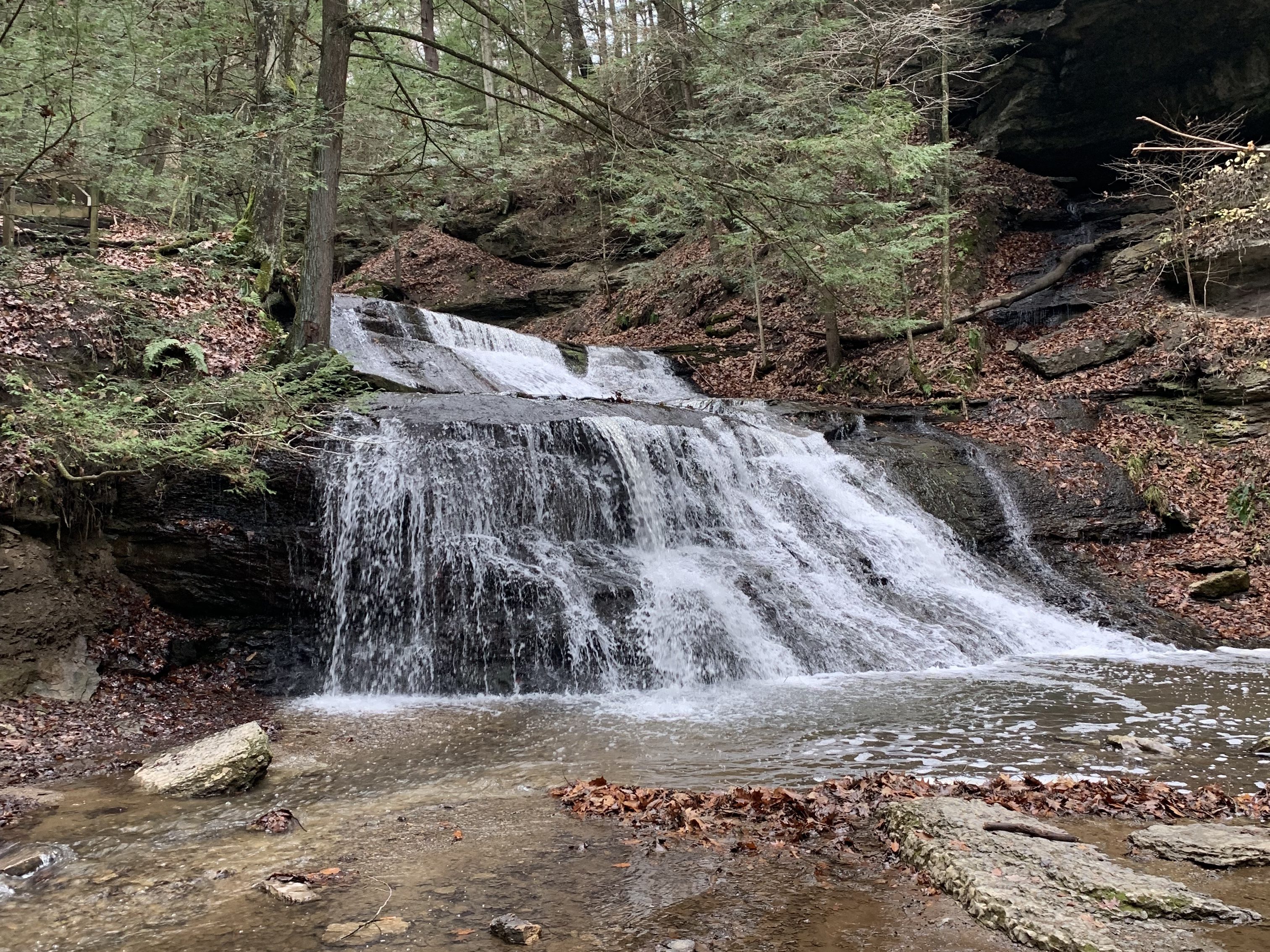
  • Hells Hollow Trail (1.0 miles, out-and-back) – Start at the Schaffer Run Road parking lot. It’s an easy 0.5 miles out and back. The most difficult part is the final staircase down to the falls. The stairs end in the creek, and you’ll have to step over stones for the best view of the falls. Be aware that this can be difficult in the Spring when the water is high.
Frozen Alpha Falls
Hell’s Hollow Falls

Moderate Hikes

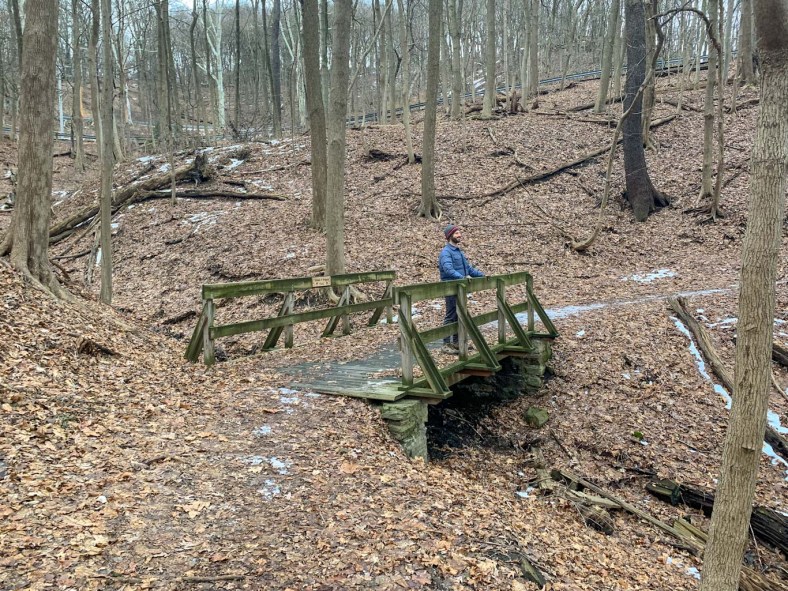
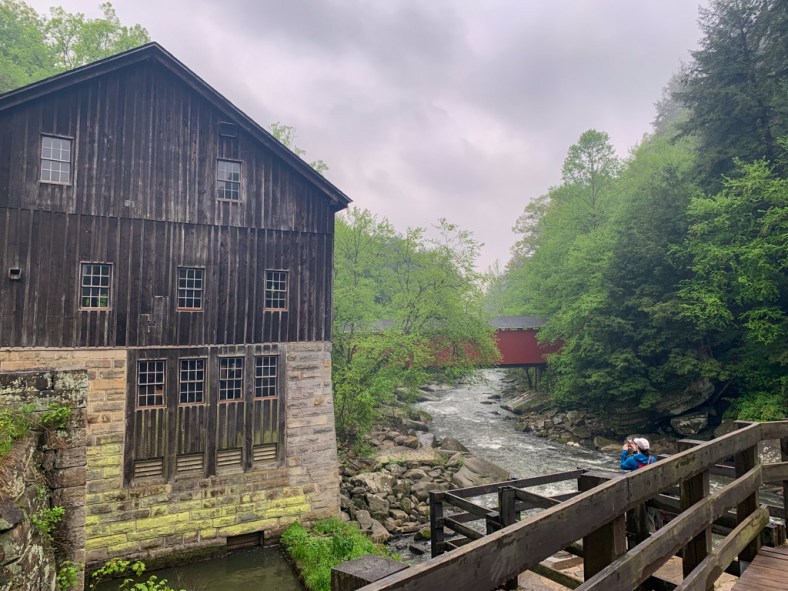
  • Kildoo Trail (2.0 miles, loop) – This is my favorite loop in the park. It also starts at the Mill and begins by following along the marked Kildoo Trail to the left of the Mill. This trail hugs the creek and is rocky and full of little waterfalls and runoff streams. It’s very beautiful, but new hikers might find the rocky terrain difficult. After about a mile, reach Eckert Bridge and cross over towards the Slippery Rock Gorge Trail. Bear to the right to hike alongside the opposite side of the creek. This side is higher up and slightly more rocky, but it makes for an exciting challenge. Finally, you’ll close the loop by crossing through the covered bridge.
  • Breckneck Falls (0.5 miles, out-and-back) – Another short hike to see a lesser-known waterfall in the park. Turn to the left from Eckert Bridge to start on the Breakneck Falls trail. It’s an easy hike with a very shallow stream crossing. The only difficult section is right at the mid-point to access the falls
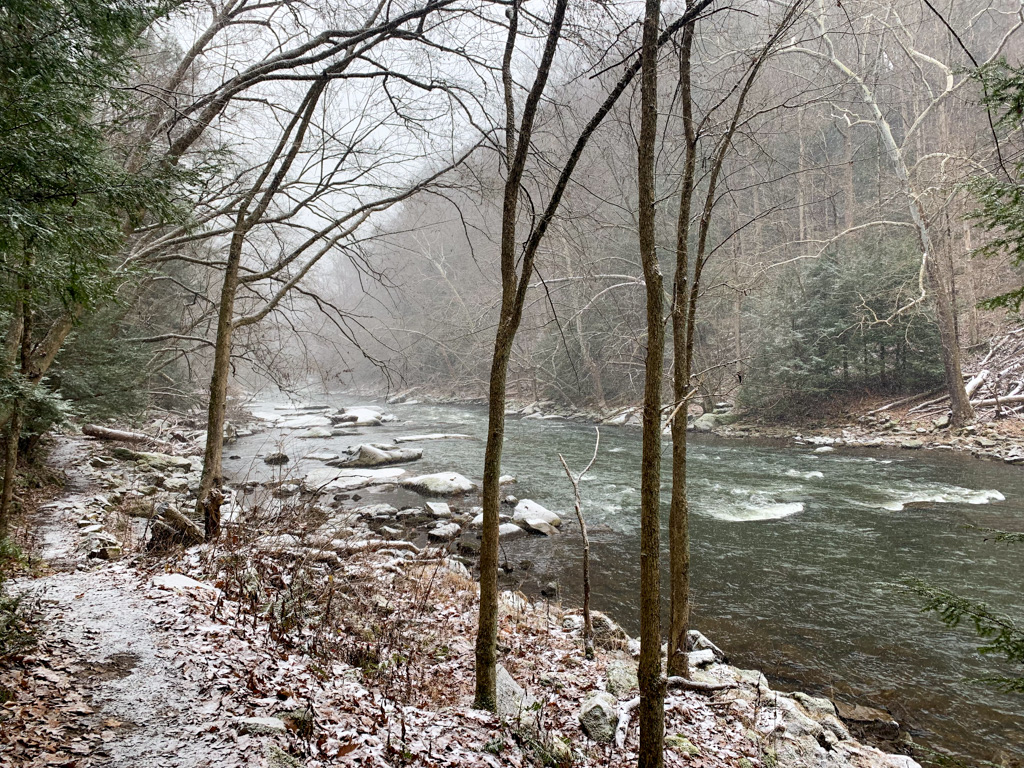
Along the Kildoo Trail

Difficult Hikes

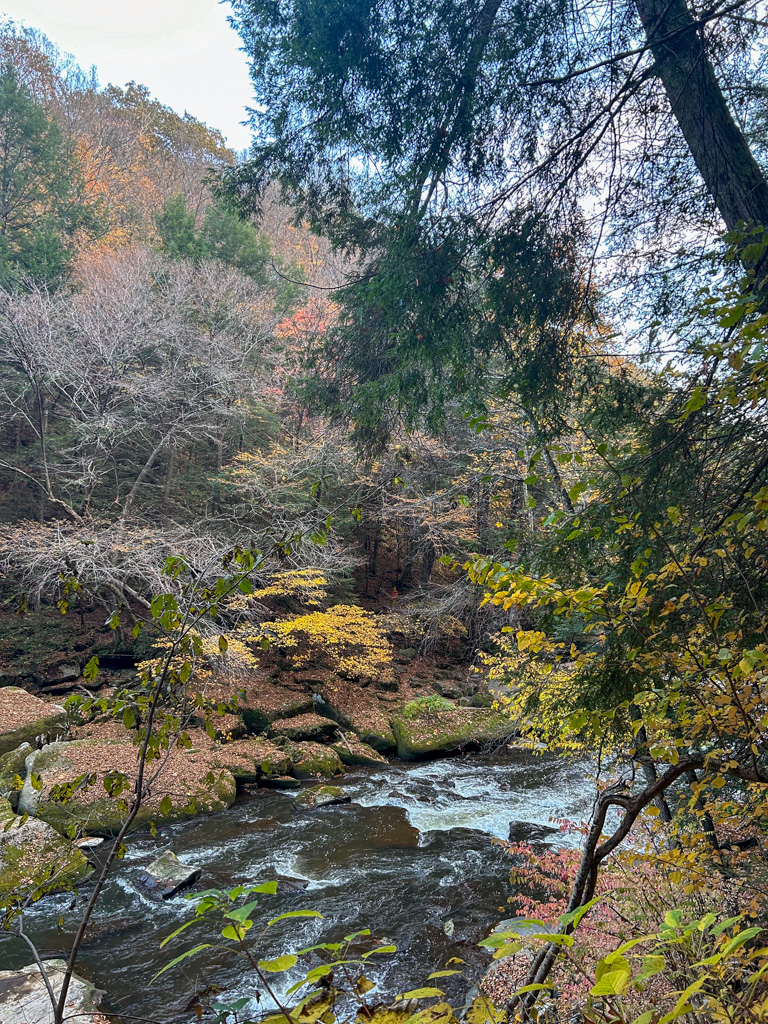
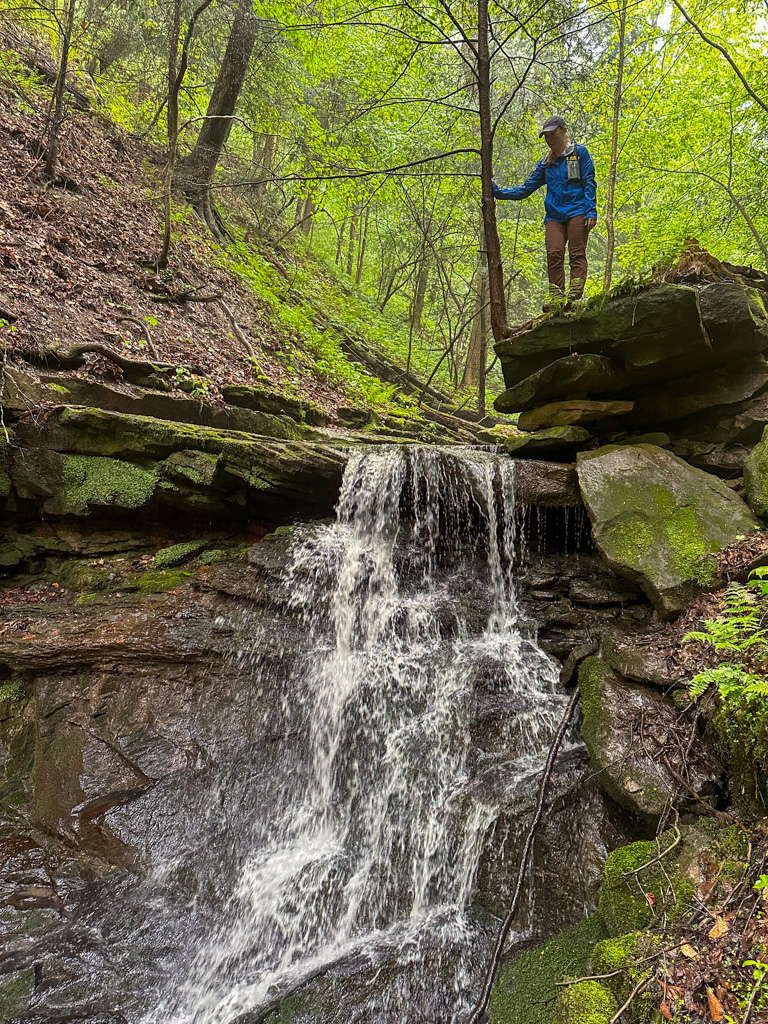
  • Slippery Rock Gorge Trail (6.2 miles, one-way) – This one-way (also called point-to-point) trail spans the length of the park, following along Hell Run until it meets up with Slippery Rock Creek. It is a rugged, difficult hike leading through the natural beauty of the Slippery Rock Gorge National Natural Landmark. If only going one way, you’ll need two cars, leaving one at the Schaffer Run parking lot and the other at the Kildoo Picnic Area lot. Starting at the Schaffer Run Lot, follow the signs for the Slippery Rock Gorge Trail (blue blaze). Along the trail, you’ll encounter old-growth forests, a natural landbridge, hidden waterfalls, and stream crossings. The trail leads all the way to the covered bridge and gristmill. For a real challenge, try this as an out-and-back, adding in the Kildoo Trail for a loop at the halfway point before heading back along the Slippery Rock Gorge Trail. If tackling the whole trail, make sure to bring plenty of water and snacks, and give yourself ample time to complete. When a friend and I tackled the full out-and-back, it took the better part of 5 hours.
Other Things to Do

Gristmill Tour

A 19th-century gristmill is a key feature of the park. For decades, this mill served as a hub of the community where farmers brought their grains to be milled into flour. The mill eventually closed in the 1920s and was eventually transferred to the state for long-term preservation. Today, you can tour the mill and learn more about how it used the creek waters to grind grains.

The historic gristmill is open for tours on select days during the summer season. It’s usually open from 10:30-3:30 Wednesday thru Sunday, starting on Memorial Day. But make sure to call the park office for more details and to confirm opening times.

Geology Trail (Driving & Hiking)

The region that encompasses McConnells Mill State Park has a fascinating geological history. Follow along the Trail of Geology in McConnells Mill and nearby Moraine State Parks for a fascinating explanation of the rock and water features in the area. Stops 1-6 are located in McConnells Mill and can also be accessed by hiking!

White Water Boating

There are no rentals at McConnells Mill, but there are several points to launch personal crafts. Depending on the water level and season, the creek is rated as a Class II to IV river. The rapids can be quite dangerous and should only be attempted by experienced boaters. Also, boats are not allowed over the dam, so all boaters must exit the creek and return no less than 50 feet downstream. For more information about whitewater boating and safety, visit the State Park’s website.
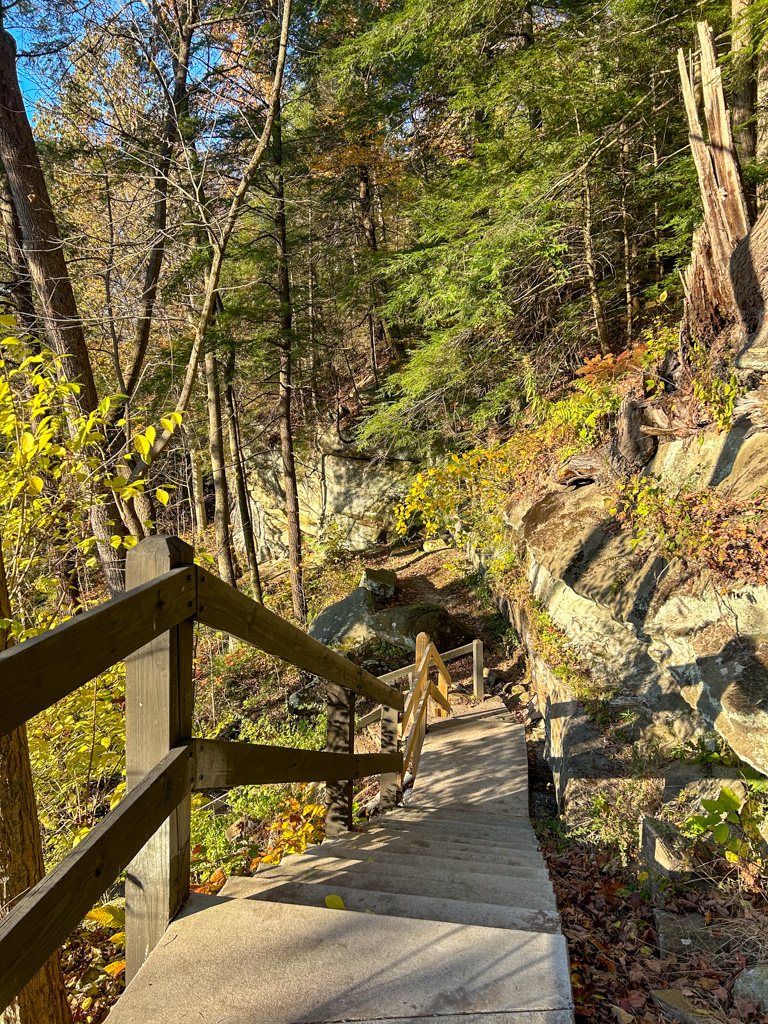
Stairs from Kildoo Picnic Area to the Mill and trailheads

Picnicking

There’s no overnight accommodations at McConnells Mill State Park, but there is a large picnic area at the Kildoo parking area with picnic tables, charcoal grills, bathroom facilities, and a field for playing. There’s also an ADA-accessible pavilion that can be reserved. This is a great spot to have lunch after exploring!

Rock Climbing

McConnells Mill is one of only four state parks in PA that allow rock climbing! There are two designated climbing areas: Rim Road and Breakneck Bridge. If going climbing, please exercise extreme caution. The routes should only be tackled by experienced climbers.

Nearby Attractions

Want to know what else to do near McConnells Mills State Park? If you’re craving more outdoor time, check out nearby Moraine State Park for swimming, boating, biking, and more, and Jennings Environmental Center for hiking, birding, and environmental education.

If you’re looking to revive with a brew and bite, head into the nearby towns of Zelienople and Harmony for a plethora of food options. For brewpubs, you can check out Union Brothers Brewing, ShuBrew, or The Harmony Inn (operated by North Country Brewing). If a treat or a coffee is more your speed, stop by Lagerhaus Bakery, Wunderbar Coffee and Crepes, or Neff Haus Ice Cream to satisfy your sweet tooth!

For more hiking adventures in Western PA, check out my guide to Waterfalls within an Hour of Pittsburgh and Best Hikes & Hops in Pittsburgh. For all of my adventures in Pennsylvania, head here!

Looking for more adventures in Pennsylvania and beyond? Check out my new book: Beer Hiking Pennsylvania and New Jersey

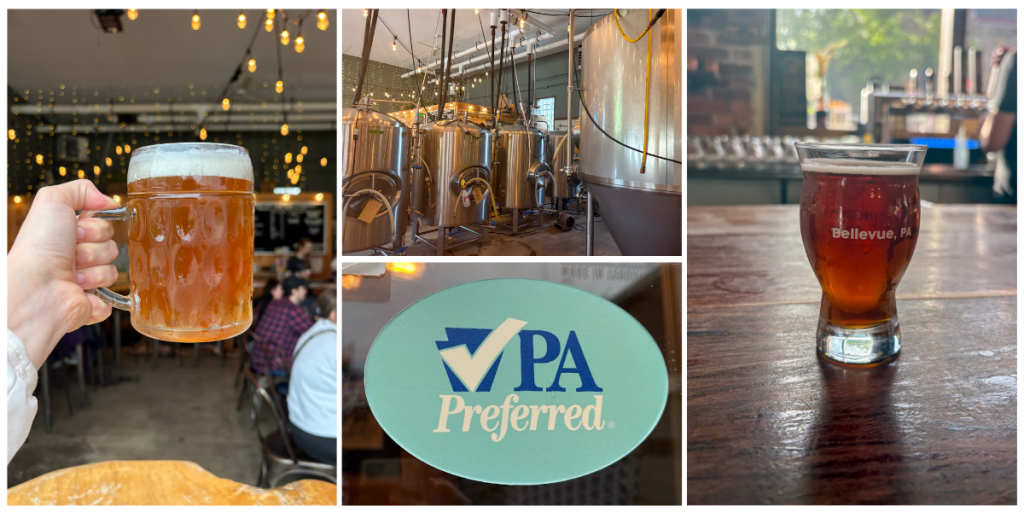
PA Craft Beer – Homemade, Homegrown

This post was paid for with Pennsylvania Taxpayer Dollars and sponsored by the PA Department of Agriculture. However, all thoughts and opinions are my own. 

After a hard day’s work, what better feeling is there than cracking open a cold one on a warm sunny day? But as you enjoy the crisp carbonation of that bitter liquid, do you really know where your beer comes from? A fresh beer can be even more satisfying when it’s brewed and sourced locally! 

Here in Pennsylvania, we have over 500 craft breweries, second only to California. For beer to be considered “craft” it is typically made by an independent company using traditional ingredients on a small scale. When you visit a craft brewery, you’re having the freshest beer, made by hand in an onsite brewing facility. Sometimes you can even see the brewing equipment around the corner while sitting at the bar!

Fermentors right in the taproom at Stick City Brewing

But to understand where the beer is coming from, we need to back up and remember the basics. Beer is a combination of basic ingredients: water, barley, yeast, and hops. But what sounds simple can turn into a complex alchemy of sourcing ingredients to get a specific flavor profile. Hops are the ingredient that gives beer its quintessential bitter flavor. They typically need a mild, wet growing environment to thrive, which can be difficult to achieve outside of specific geographic regions; most hops grown in the US come from the Pacific Northwest for this reason. While hops are the flashy component, malt is the backbone of beer. Malt is a grain that has been partially sprouted, then dried. It’s used in a variety of foods and drinks, but it’s integral to beer because it provides the sugars that start the fermentation process, thereby putting the booze in your brews. The type of malt used also contributes to the final beer’s color and flavor. Finally, the fermentation process can’t happen without yeast. This microorganism loves to chomp up the sugars in malt and converts them to carbon dioxide and alcohol. Along with water, these three ingredients make up the beverage we know and love! 

With the scale of craft beer production in Pennsylvania, brewers need a lot of grain and hops. So, where do they get these products? Many source hops and malt from major distributors in the Pacific Northwest or internationally. However, a growing number are turning to our own booming agriculture industry here in the Keystone State. 

Pennsylvania has over 7.7 million acres of farmland, most of which are family-owned farms. These nearly 49,000 farms support a multi-billion-dollar industry that supplies jobs and food right here in our state. So it seems like a natural leap for small businesses to source supplies and ingredients from farms right in their backyard, right? PA-Preferred, a program of the PA Department of Agriculture, is a resource for finding locally made food and farm products in Pennsylvania! With this resource, both consumers and producers can easily find businesses to source ingredients from, whether it’s for hobbyist homebrewers or full-time production brewers.

For Nick Salkeld, brewer and owner of Stick City Brewing in Mars, PA, using local products is a no-brainer. “You can physically go out and see the product. You can immediately see and meet the person who grew it,” he said. “You can even see the dirt where it came from.” 

Sustainability is a huge part of Salkeld’s mission, and buying local is a key part of that. He often works with a malt supplier in Butler County, CNC Malts, for custom malt blends to get the exact flavor profile and coloring he’s aiming to achieve for his beer. All of the grains at CNC Malts are sourced locally and floor-malted right in Butler County. More than that, Salkeld has a personal connection to the company. The maltsters’ (which is what you call a person who makes malt) processing facility is the old Clearfield Schoolhouse where Salkeld’s dad went to school. It can’t get more local than that! 

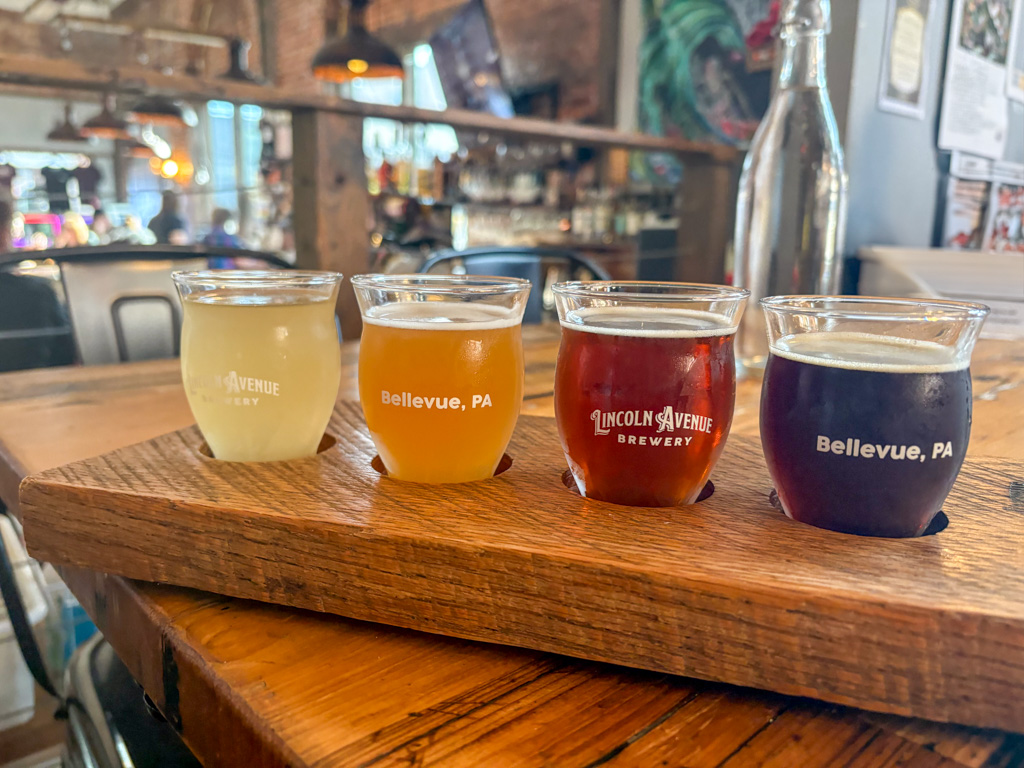
A flight of house-made brews at Lincoln Avenue Brewery

Lincoln Avenue Brewery in Bellevue, PA (affectionately called LAB) also sources much of its malt from CNC Malts. The brewery also boasts a full kitchen, so it’s not just about sourcing local beer ingredients but the whole range of foods to stock their kitchen. A rotating menu based on seasonal fruits and veggies means that they can buy the bulk of their produce from Haffey Farms, a Bellevue Farmers Market staple. For Lisa Saylor, brewery co-owner, buying local just makes sense because it supports a regional sustainability circle. The spent grains from their house-made beer are given back to local farmers to feed their livestock. In turn, that livestock might eventually make its way to Tom Friday’s Market, a butcher shop where Lincoln Avenue sources the bulk of its meat. Talk about farm to plate! 

Working with local products and producers is a “more iterative process, rather than top down,” says Salkeld of Stick City. He can work directly with the folks at CNC Malts to create custom grain blends that give Stick City’s beer a unique flavor. But what about those pesky hops that prefer the Pacific Northwest?

It’s notoriously difficult to grow hops in the Pennsylvania climate; as the saying goes, “it’s a wet heat”!. But that’s not stopping some plucky PA farmers from giving it a shot! Especially when a survey from Penn State Extension school found that a majority of craft brewers in the state are inspired by sourcing locally. Stick City, for one, adds fresh hops grown in Western PA by Hazy Daze Farms to their late August beers (when hops are harvested) and also sources dried and pelletized PA-grown hops from CNC Malts. Through the PA Preferred online database, any brewers interested in local hops and grains can find PA farmers growing them.

PA’s brewery culture is booming, and it can only get stronger with more emphasis on sourcing local ingredients. Through the PA Preferred Program, brewers can easily find local farmers to partner with and strive toward beers that are homemade and homegrown, with a taste of Pennsylvania in every sip!

Want to learn more about the PA Preferred Program and how you can support local farmers? Check out www.papreferred.com or follow them on Instagram for announcements of new members to the program. 

Best Hikes & Hops in Pittsburgh

Looking for some hikes and brewery combos but want to stay within the City limits? This guide is for you!

  1. Frick Park & East End Brewing

Can you can a more classic combo than Frick Park & East End? When I think of summer, I think of meandering through Frick Park, with no true destination in mind followed by a crisp beer on the patio of East End Brewing. I suggest parking near the Frick Museum and taking Tranquil Trail all the way to the Nine Mile Run boardwalk. Once you reach Commercial Street, you can either turn around and retrace your steps or wind through some of the wooded trails like Falls Ravine, Riverview, and Clayton. After you’re satisfied, drive over to East End Brewing for a crisp brew and a deep-dish pizza.

  1. Emerald View & Inner Groove

This loop is the best of urban hiking! It starts out on the wooded Emerald View trail, meandering around Mt. Washington, then pops you out right at the overlook! From there, enjoy walking along Grandview Ave and then back through the historic neighbors of Mt. Washington. If you’re feeling extra frisky, you can even continue along the Grandview park section of the Emerald View trail. Or stop for a rest and treat at the Shiloh Street shops! The world is your oyster with this one. One big recommendation though is to end your excursion with a visit to Inner Groove’s Allentown taproom! They’ve got awesome beer, bar games, and an outdoor patio. What more could you want?

  1. Riverview Park & Late Addition Brewing + Blending

Riverview Park is a large 260-acre park in the North Side of Pittsburgh. It is a refreshing greenspace tucked into the busy Northside neighborhoods. There are wooded hiking trails, a pool, pavilions, a visitor’s center, and ballfields. But probably the most well known feature of the park is the Allegheny Observatory. There are many intersecting trails in the park, so I recommend having a route planned or downloading a map. This loop on AllTrails is a great way to see most of the park’s highlights. Afterward, check out the cozy taproom and patio at Late Addition Brewing + Blending on Western Ave for unique takes on traditional brews.

  1. Allegheny Cemetery & Coven Brewing

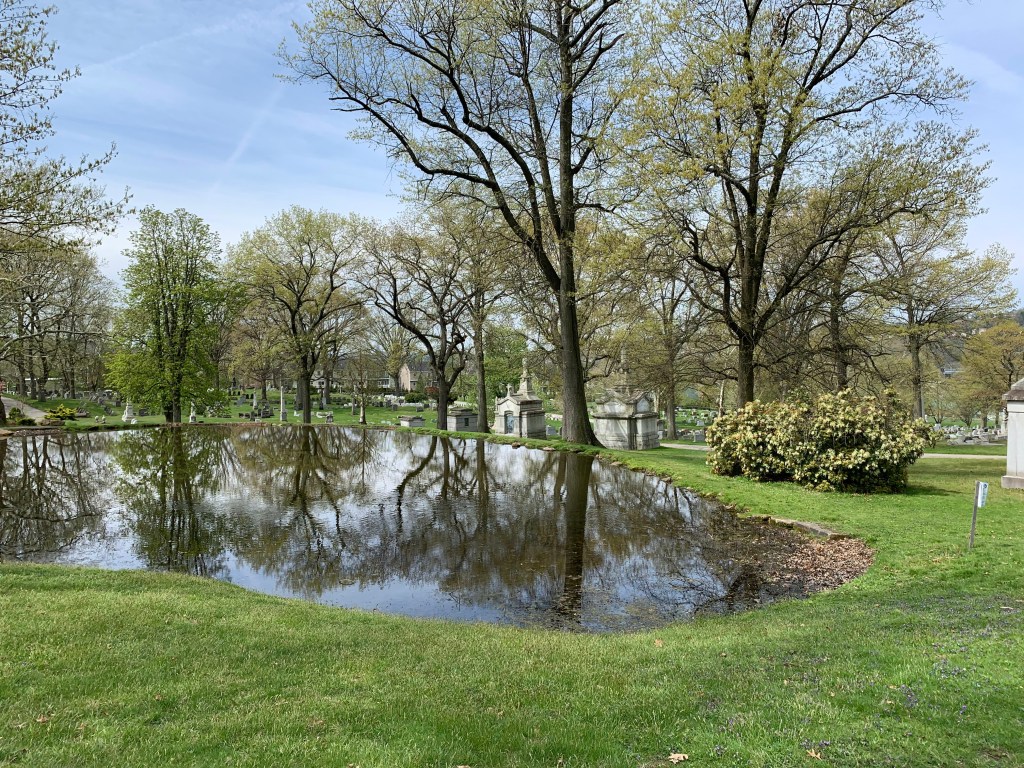
Allegheny Cemetery isn’t your typical hike but if you’re looking for an urban walk, I highly suggest you check it out! Before heading out, download the cemetery’s app/website for a self-guided tour that takes you to various notable graves with a brief history of the person. We learned so much about local history and got to take in the beauty of the cemetery grounds. Your walk can be as long or as short as you want, but afterwards, be sure to walk across the street to Coven Brewing! Take a seat outside, grab something from the food truck and enjoy a delicious brew. Coven is sure to be a new favorite! If you’re in the mood for an urban history hike and hop, this one’s for you!

  1. Schenley Park & Mondays Brewing (Greenfield)

I’ve been hiking and running in Schenley Park since my college days at Pitt. It’s a popular city park in the Oakland neighborhood near Pitt and CMU’s campuses. There are miles of single and double track trail with a lovely pond in the center. My favorite trail is the newly named Ponticulus Trail, which runs between the Upper and Lower Panther Hollow trails and is so beautiful. Afterward, you can head across the Greenfield Bridge to the Mondays Brewing Taproom in Greenfield. The newly opened space boasts tons of seating, a taplist of their own beers and some other Pittsburgh favorites, and a tasty menu from Smashed N’ Fried.

This list is ever growing! Stay tuned as I explore more of the hikes and breweries in Pittsburgh!

Looking for more adventures in Pennsylvania and beyond? Check out my new book: Beer Hiking Pennsylvania and New Jersey

10 Waterfalls Within an Hour of Pittsburgh

While the western side of the state isn’t exactly known for its waterfalls, there are actually a few you can visit within an hour of Pittsburgh! Ranging from a few feet to almost 50 feet high, these waterfalls are definitely worth a visit. Some can even be seen from the roadside without a long hike! Remember to always stay on trails and don’t venture beyond safety barriers. If visiting in the winter, spikes and trekking poles are a good idea. Now get out there and chase some waterfalls!

Looking for more adventures in Pennsylvania and beyond? Check out my new book: Beer Hiking Pennsylvania and New Jersey
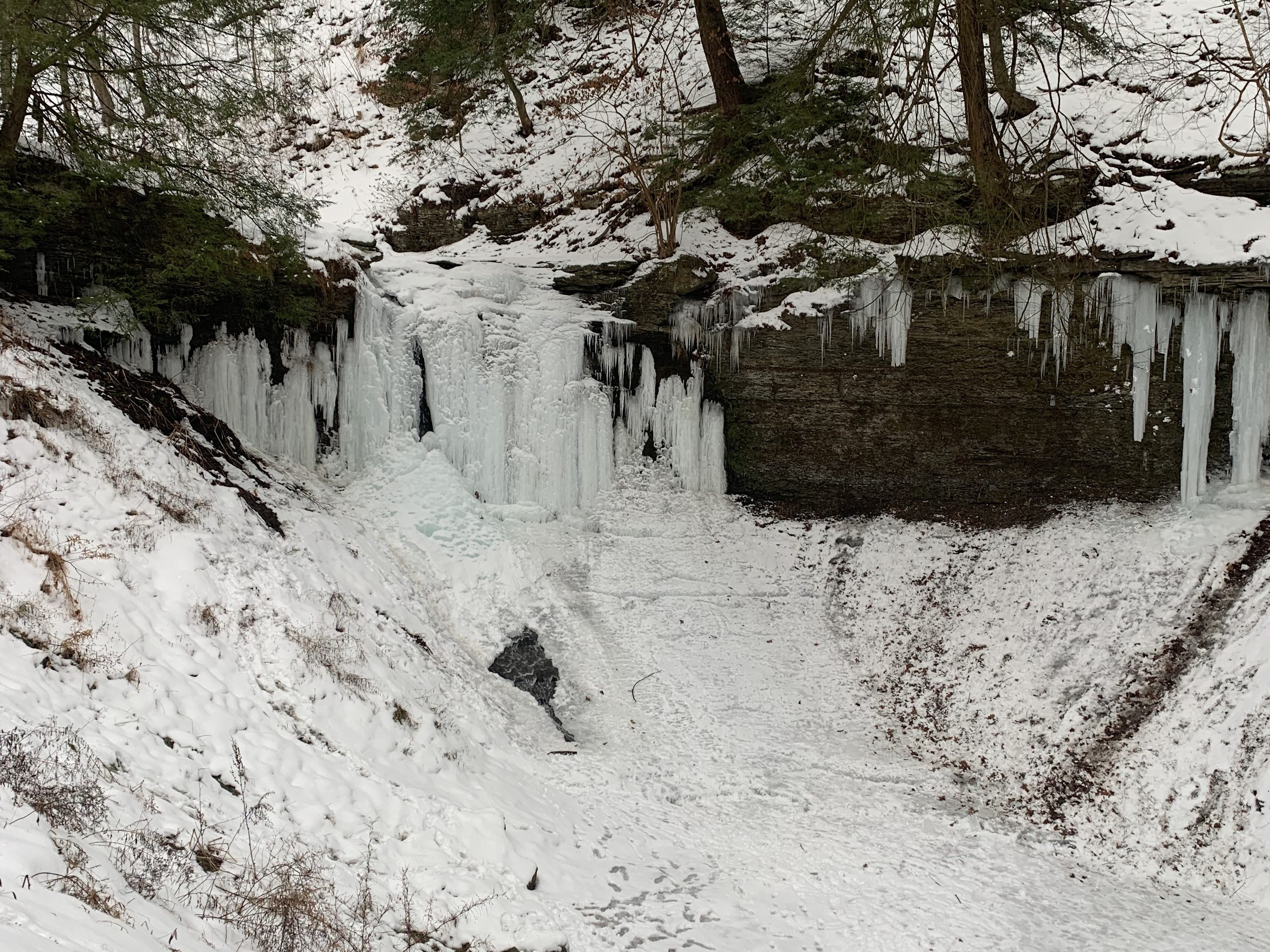
  1. Fall Run Park (Glenshaw)

Did you know there’s a waterfall only 15 minutes from Downtown Pittsburgh? Check out Fall Run Park, a community park in Shaler Township. The 25-ft waterfall is only 0.5 miles from the parking lot along a wide path dotted with bridges over a creek. The narrow falls are best seen after rain and are particularly impressive during the winter when the water completely freezes. This is a popular spot, so you’re likely to meet other spectators along the way.

  1. Settlers Cabin Waterfall (Robinson Township)

Settlers Cabin Park is one of the 9 county parks managed by Allegheny County. At only 17 minutes away from Downtown Pittsburgh, it’s perfect for an afternoon or even afterword visit. Among the miles of color-coded trails is this quaint waterfall. The quickest way to see it is to park at the dog park and get on the Green/Waterfall trail. Follow for only 0.5 miles to reach these 4-ft falls. While not the most impressive cascade, this is a charming trail and the falls are lovely after some rain. There are plenty of other trails to add if you want a longer route!

  1. Montour Woods Falls (Moon Township)

Montour Woods is one of my favorite local hiking spots! There are miles of trails and opportunities to connect to Moon Park and the Montour Trail for even longer loops. But thankfully you don’t have to hike miles to see this cascade on Meeks Run. From the parking lot on Hassam Road, follow Meeks Run Trail for only 0.3 miles and you’ll encounter this delightful trickle. Unlike other local falls, this one flows strongly throughout the year.

  1. Buttermilk Falls (Beaver Falls)

There are multiple Buttermilk Falls in Pennsylvania (and beyond) but here I’m talking about Buttermilk Falls Natural Area in Beaver Falls. Also called Homewood Falls, this roadside feature is only 35 minutes away from Pittsburgh (with tolls). There’s a small parking lot for about 5 cars at the trailhead, then its only a 0.2 mile walk to the falls. The impressive 30 foot drop spills out strongly over a rock edge, making for a waterfall that you can actually walk behind. In the winter, the falls can even freeze, for a truly incredible experience. The falls can also be viewed from a small parking lot on 1st Avenue, across the street from the Homewood Methodist Church. The view area is right beside the church, but for your safety, please don’t venture beyond the fence.

  1. Frankfort Mineral Springs Waterfall (Burgettstown)

A trip to Raccoon Creek State Park is wonderful any time of year. There are many trails to explore and the wildflower preserve is beautiful in the spring and fall. And it can reached within 40 minutes from Downtown! But one of the most popular spots in the park is Frankfurt Mineral Springs. Right beside the mineral springs is a beautiful 10-foot waterfall. My absolute favorite time to visit is in late April when a field of white trilliums line the top of the waterfall. To get to the falls, park at the main park office and follow the Mineral Springs Trail. The round trip is only 1.2 miles and is an easy walk, although some of the rocks near the falls can get slippery when wet.

  1. Hells Hollow (Portersville)

Take a trip north of the city to McConnells Mill State Park for another impressive falls. At about 50 minutes, this is a big further from town. But the beauty of McConnells Mill is well worth the drive! Hells Hollow is located on the west side of the park. Although its a popular spot, there is plenty of parking in the Schaffer Road lot. From the lot, its an easy 0.5 mile walk to the falls. The most difficult part is descending the stairs to visit the falls. They end in the waters of Hell Run and you have to step across some rocks to get the full effect of the falls. Beware that this can be dangerous when the water is high or icy.

Want more information about hiking at McConnells Mill? Check out my guide to Hells Hollow & Shubrew

  1. Alpha Falls (Portersville)

You don’t even have to change parks to see this waterfall! Located on the other end of McConnells Mill, near the historic gristmill and covered bridge is the stunning Alpha Falls. To access the trailhead, park at the main park lot for the Kildoo picnic area on Kildoo Road. From there, follow the trail behind the bathrooms down along the hillside for 0.2 miles to reach the Mill. From the Mill, head to the right on Alpha Pass Trail. This rocky trail follows along Slippery Rock Creek through towering hemlock trees and little trickles of water runoff. After 0.5 miles, you’ll reach a 30-foot stream of water that cascades over a sheer rock face. The water flow is modest but makes for a peaceful sight and beautiful ice features in the fall.

There are several other seasonal waterfalls in the park, most of which can be seen along the Kildoo Trail Loop, a 2 mile loop around Slippery Rock Creek starting at the gristmill and heading to Eckert Road bridge and back.

  1. Springfield Falls (Mercer)

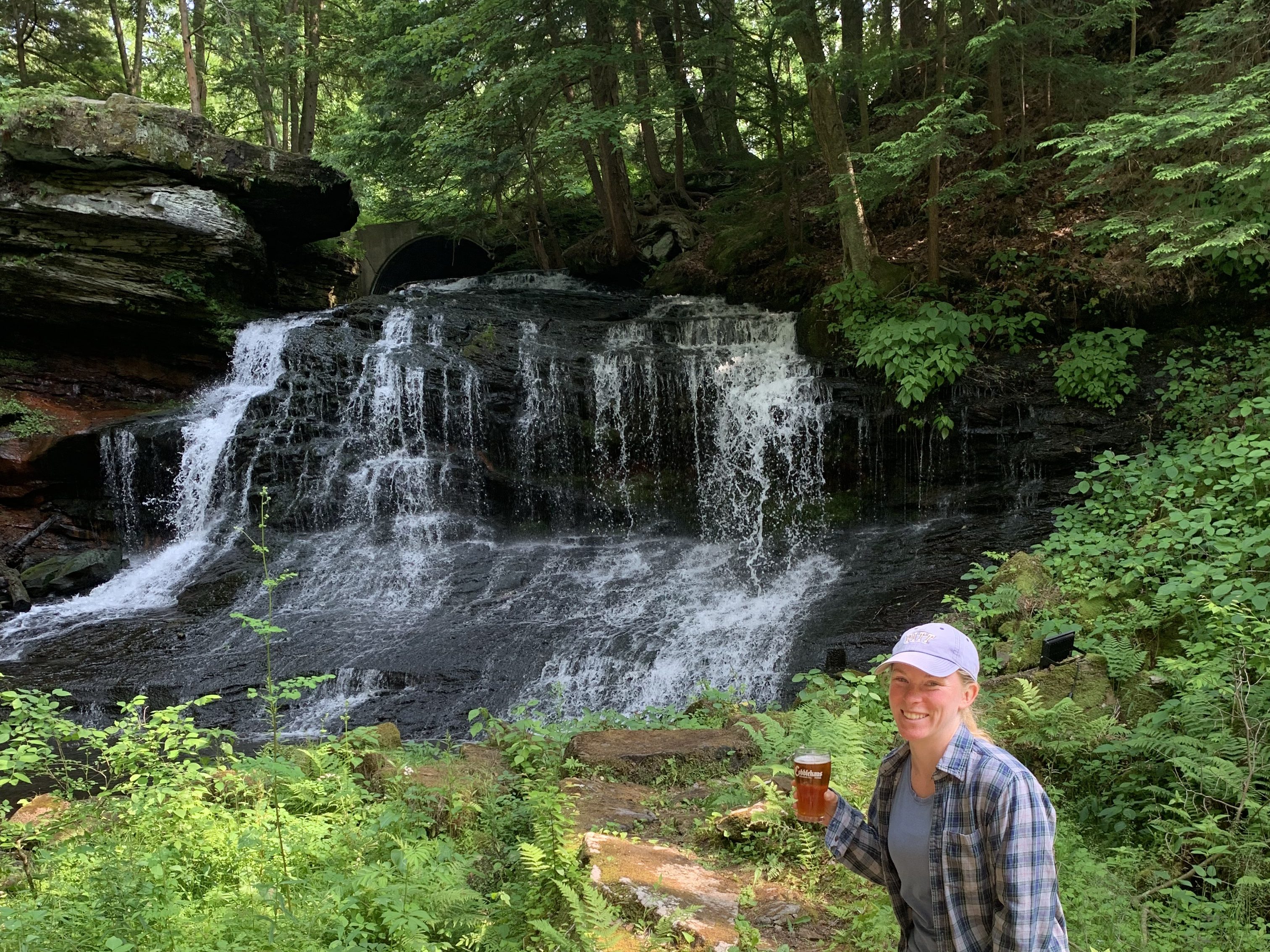
Springfield Falls is the only waterfall I know of that you can enjoy a craft beer beside! That’s right, Cobblehaus at the Falls offers a truly stunning spot to view these falls in Mercer. At 55 minutes from town, it might seem like a long drive to visit a brewery, but the views here are definitely worth it. If you’re just looking to see the falls, you can access them from a small parking lot on Falls Road. The waterfall is technically located in State Game Lands 284, so be aware if visiting during hunting season. Its an easy 0.3 miles from the road to the falls, although the way down to the bottom can be a bit tricky.

  1. Big Run Falls (New Castle)

Staying north of the city, we’re heading to New Castle for this next waterfall. Big Run Falls is tucked into the ruins of Cascade Park, a former amusement park, now turned local park. There’s a large parking lot on Highway 65. From there, follow along the park road, past the abandoned amusement park pavilions. On the left, there is a municipal garage. To the right is a gorge with a stream. The waterfall will be directly underneath you. Continue along the road to a picnic area with a better vantage point of the falls. Please enjoy the falls from here. Do not venture beyond the fence as the hillside is very steep and the landscape is delicate. You’ll also see the remaining track of a rollercoaster that once zoomed along the stream.

There are also several short trails in the park if you’d like to stay and explore!

  1. Quaker Falls (Lawrence Co.)

The very last waterfall on my list and arguably one of the most impressive! Quaker Falls is tucked into the newly created Quaker Falls Recreation Area, located in Lawrence County just a few miles away from the Ohio border. There is a large parking lot and a newly built stairway down to a viewing platform for the falls. The impressive 50-foot cascade really took me by surprise when I visited! I didn’t even know that we had a fifty-foot waterfall on this side of the state. Back at the parking lot, there’s also a short walking trail along the top of the falls with interpretive signs about the history of the area that leads to a few other viewing platforms. Please be aware that any foraged trail down to the bottom of the falls is not recommended and hasn’t been cared for by the park organizers.

Beer Hiking Pennsylvania & New Jersey

A guide to the best hikes and microbreweries in Pennsylvania and New Jersey
Beer-lovers and hiking enthusiasts, these 35 hikes through Pennsylvania and New Jersey are for you! Each carefully selected hike leads you through a stunning natural landscape and ends near a brewery or a brewpub where a local craft beer awaits you. This full-color guidebook features the best one- to six-hour beer hikes around the mountains, waterfalls, battlefields, beaches, and forests of Pennsylvania and New Jersey. It guides you from the watershed of the Delaware Valley to the grand expanse of the PA Wilds, and from the beaches of the Jersey Shore to the rocky hills of the Laurel Highlands.

Each trail description includes details on access, difficulty, duration, points of interest, and, at trail’s end, a recommended beer, with notes on its appearance, aroma, and taste. You’ll also get an inside look at the creative and passionate craftspeople behind the brewing process.

Disclosure: This post contains affiliate links, meaning I get a commission if you decide to purchase something. All income I may receive goes back into hosting and running this site!

Publisher’s website: Helvetiq