PA Craft Beer – Homemade, Homegrown

This post was paid for with Pennsylvania Taxpayer Dollars and sponsored by the PA Department of Agriculture. However, all thoughts and opinions are my own. 

After a hard day’s work, what better feeling is there than cracking open a cold one on a warm sunny day? But as you enjoy the crisp carbonation of that bitter liquid, do you really know where your beer comes from? A fresh beer can be even more satisfying when it’s brewed and sourced locally! 

Here in Pennsylvania, we have over 500 craft breweries, second only to California. For beer to be considered “craft” it is typically made by an independent company using traditional ingredients on a small scale. When you visit a craft brewery, you’re having the freshest beer, made by hand in an onsite brewing facility. Sometimes you can even see the brewing equipment around the corner while sitting at the bar!

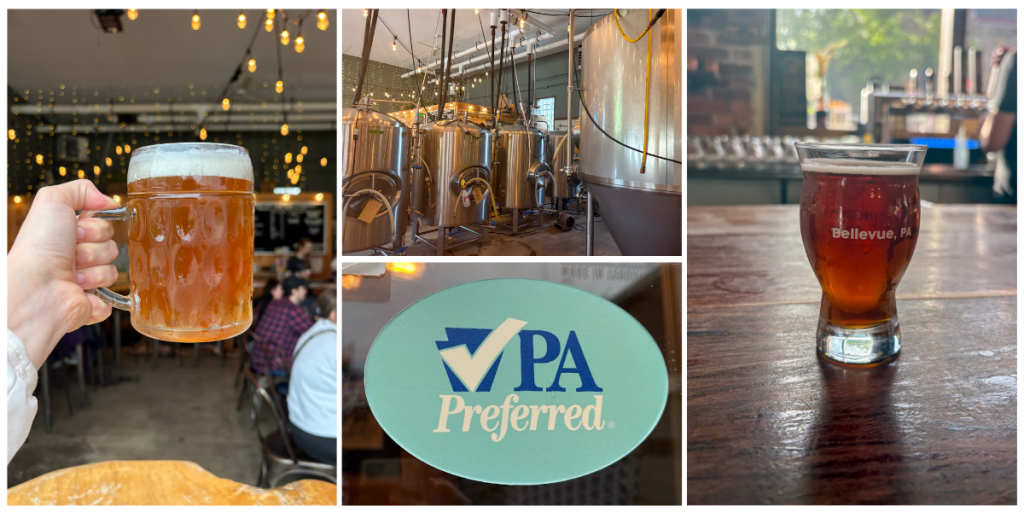
Fermentors right in the taproom at Stick City Brewing

But to understand where the beer is coming from, we need to back up and remember the basics. Beer is a combination of basic ingredients: water, barley, yeast, and hops. But what sounds simple can turn into a complex alchemy of sourcing ingredients to get a specific flavor profile. Hops are the ingredient that gives beer its quintessential bitter flavor. They typically need a mild, wet growing environment to thrive, which can be difficult to achieve outside of specific geographic regions; most hops grown in the US come from the Pacific Northwest for this reason. While hops are the flashy component, malt is the backbone of beer. Malt is a grain that has been partially sprouted, then dried. It’s used in a variety of foods and drinks, but it’s integral to beer because it provides the sugars that start the fermentation process, thereby putting the booze in your brews. The type of malt used also contributes to the final beer’s color and flavor. Finally, the fermentation process can’t happen without yeast. This microorganism loves to chomp up the sugars in malt and converts them to carbon dioxide and alcohol. Along with water, these three ingredients make up the beverage we know and love! 

With the scale of craft beer production in Pennsylvania, brewers need a lot of grain and hops. So, where do they get these products? Many source hops and malt from major distributors in the Pacific Northwest or internationally. However, a growing number are turning to our own booming agriculture industry here in the Keystone State. 

Pennsylvania has over 7.7 million acres of farmland, most of which are family-owned farms. These nearly 49,000 farms support a multi-billion-dollar industry that supplies jobs and food right here in our state. So it seems like a natural leap for small businesses to source supplies and ingredients from farms right in their backyard, right? PA-Preferred, a program of the PA Department of Agriculture, is a resource for finding locally made food and farm products in Pennsylvania! With this resource, both consumers and producers can easily find businesses to source ingredients from, whether it’s for hobbyist homebrewers or full-time production brewers.

For Nick Salkeld, brewer and owner of Stick City Brewing in Mars, PA, using local products is a no-brainer. “You can physically go out and see the product. You can immediately see and meet the person who grew it,” he said. “You can even see the dirt where it came from.” 

Sustainability is a huge part of Salkeld’s mission, and buying local is a key part of that. He often works with a malt supplier in Butler County, CNC Malts, for custom malt blends to get the exact flavor profile and coloring he’s aiming to achieve for his beer. All of the grains at CNC Malts are sourced locally and floor-malted right in Butler County. More than that, Salkeld has a personal connection to the company. The maltsters’ (which is what you call a person who makes malt) processing facility is the old Clearfield Schoolhouse where Salkeld’s dad went to school. It can’t get more local than that! 

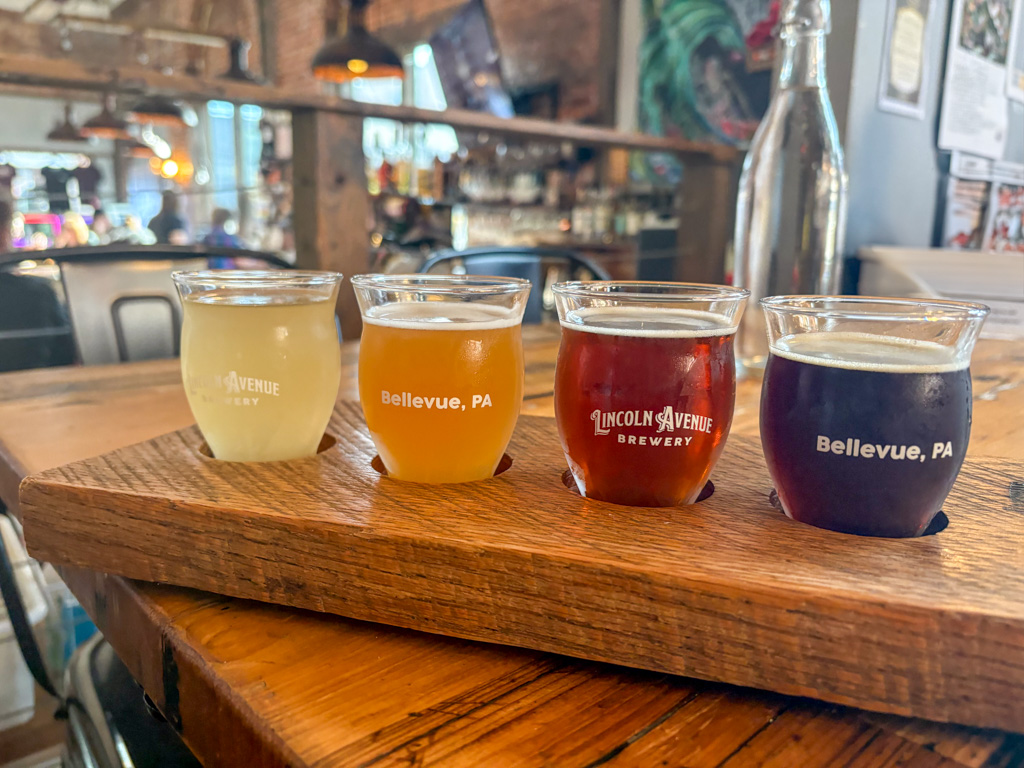
A flight of house-made brews at Lincoln Avenue Brewery

Lincoln Avenue Brewery in Bellevue, PA (affectionately called LAB) also sources much of its malt from CNC Malts. The brewery also boasts a full kitchen, so it’s not just about sourcing local beer ingredients but the whole range of foods to stock their kitchen. A rotating menu based on seasonal fruits and veggies means that they can buy the bulk of their produce from Haffey Farms, a Bellevue Farmers Market staple. For Lisa Saylor, brewery co-owner, buying local just makes sense because it supports a regional sustainability circle. The spent grains from their house-made beer are given back to local farmers to feed their livestock. In turn, that livestock might eventually make its way to Tom Friday’s Market, a butcher shop where Lincoln Avenue sources the bulk of its meat. Talk about farm to plate! 

Working with local products and producers is a “more iterative process, rather than top down,” says Salkeld of Stick City. He can work directly with the folks at CNC Malts to create custom grain blends that give Stick City’s beer a unique flavor. But what about those pesky hops that prefer the Pacific Northwest?

It’s notoriously difficult to grow hops in the Pennsylvania climate; as the saying goes, “it’s a wet heat”!. But that’s not stopping some plucky PA farmers from giving it a shot! Especially when a survey from Penn State Extension school found that a majority of craft brewers in the state are inspired by sourcing locally. Stick City, for one, adds fresh hops grown in Western PA by Hazy Daze Farms to their late August beers (when hops are harvested) and also sources dried and pelletized PA-grown hops from CNC Malts. Through the PA Preferred online database, any brewers interested in local hops and grains can find PA farmers growing them.

PA’s brewery culture is booming, and it can only get stronger with more emphasis on sourcing local ingredients. Through the PA Preferred Program, brewers can easily find local farmers to partner with and strive toward beers that are homemade and homegrown, with a taste of Pennsylvania in every sip!

Want to learn more about the PA Preferred Program and how you can support local farmers? Check out www.papreferred.com or follow them on Instagram for announcements of new members to the program. 

Hiking While Pregnant: A Guide for Moms-to-Be

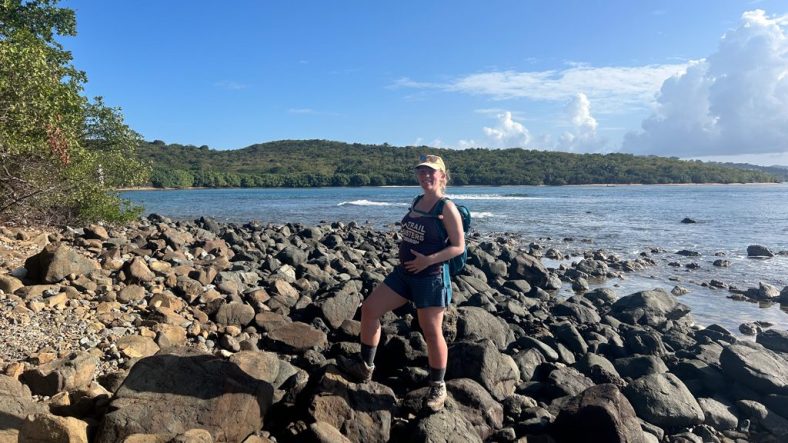
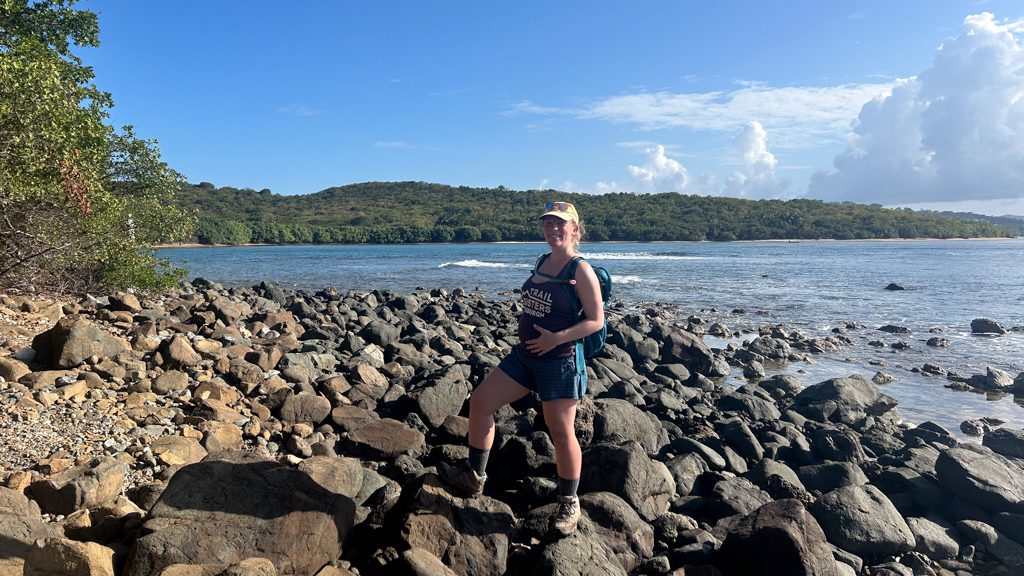
Beach hike in Puerto Rico at 25 weeks pregnant

Finding out that you’re expecting can usher in a whole range of emotions. Excitement, anxiety, fear, elation. But one thing you might worry about is if you’ll still be able to do your favorite activities. Well, expecting a new family member doesn’t mean your hiking days are done! Your body goes through some major changes throughout pregnancy, but there are plenty of ways to modify your activity so you can still safely hit the trails. In fact, exercising through pregnancy is usually recommended!

Disclaimer: I’m not a medical professional, so always check with your doctor first to make sure that hiking is still considered safe, especially if you have any complications. 

This post contains affiliate links, meaning I get a commission if you decide to purchase something. I have only shared links for items I have personally tested and would recommend. All income I may receive goes back into hosting and running this site!

These are some tips for getting out there while pregnant! Please remember that everyone’s experience is different, and you should only keep hiking if you feel comfortable and your doctor gives the thumbs up. 

10 Tips for Safe Hiking While Pregnant (All Trimesters)

  1. Stretch out first! 
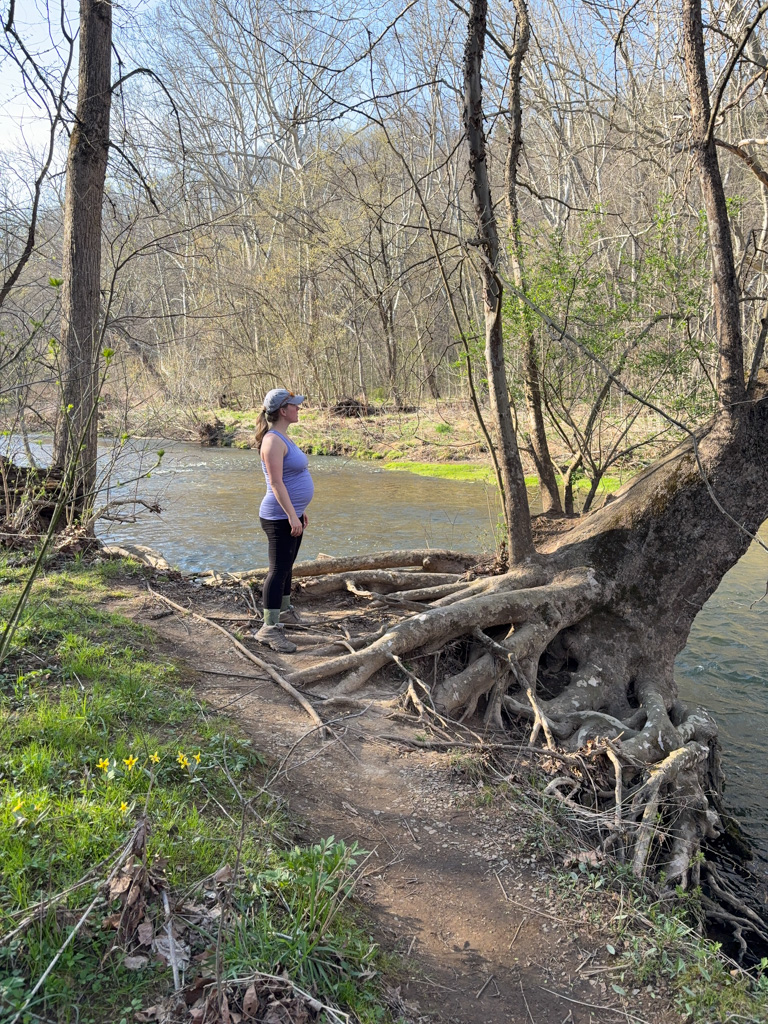
Solo hike at 32 weeks

I used to roll out of my car and hit the trails. But it’s a good idea to take some time to stretch and loosen up your muscles and joints, especially while pregnant. It helps to avoid injury and reduces soreness. Plus, your back and joints will thank you! Remember, if anything starts to hurt or doesn’t feel right, call it quits or try an easier hike. 

  1. Embrace a slower pace on easier trails 

It’s not a race! With all that extra blood in your system and a little one pressing on your lungs, it’s a good idea to stick to trails with less elevation. Especially later in pregnancy when mobility is more difficult, stick with trails that you already know and feel comfortable with. 

  1. Pack Plenty of Water

Okay, I always suggest bringing water on a hike, but when you’re pregnant, bring even more! I also like to keep an extra bottle in the car for my drive home. I’ve been packing about twice as much water as I would on a normal hike. Better to have too much than to run out! Take sips throughout your hike and don’t wait until you feel thirsty to drink. I always pack my hydration pack for hikes these days.

  1. Have a Pee Plan 

So with all that water, you’re definitely going to have to pee on the hike. Even if you’re someone who doesn’t usually feel the urge, make sure to have a game plan in case the water hits when you least expect. I highly recommend investing in a pee funnel. This is a cheap tube that allows you to pee while standing up and doesn’t require you to fully pull your pants down. It’s been a lifesaver on my pregnancy hikes! A pee cloth also helps clean up and doesn’t stay wet or smell.

  1. Hike with Trekking Poles

I’ve never been one to hike with trekking poles, but I’ve been converted. It’s incredible how much your balance changes while pregnant, even before you have a big belly. Between carrying more weight, relaxin loosening your joints, and early pregnancy dizziness, you’re bound to feel a little off balance. I found that hiking with poles helped steady me and made going uphill so much easier. Also, definitely opt for sturdy shoes with plenty of traction. 

Winter hike at 18 weeks. Poles were life-changing!
  1. Snack often 

Make sure to bring plenty of snacks! We all know snacking is one of the best parts of hiking, but remember that your body is burning a lot more calories and you’ll need to replace them faster. Plus you don’t want your blood sugar to dip and cause any additional dizziness

  1. Rest Often 

You will probably find yourself getting tired more easily. It can be frustrating to feel like you can’t do as much, but remember your body is working really hard to make that baby! Be kind to yourself and take frequent breaks. You’ll notice that your heart rate will increase faster than usual, and you may get overheated more easily (thanks blood). Just take it easy and remember you can always cut a hike short if needed. Never push yourself, especially if it’s sunny or the temperatures are high.

  1. Remember sunscreen and bug spray 

Being pregnant is already uncomfortable enough; don’t add bug bites and sunburn to the mix! Bring your sunscreen and bug spray and apply often! If you live in a hot, sunny climate, try to hike early in the day to avoid being out in the most intense sun.

9. Lighten the load

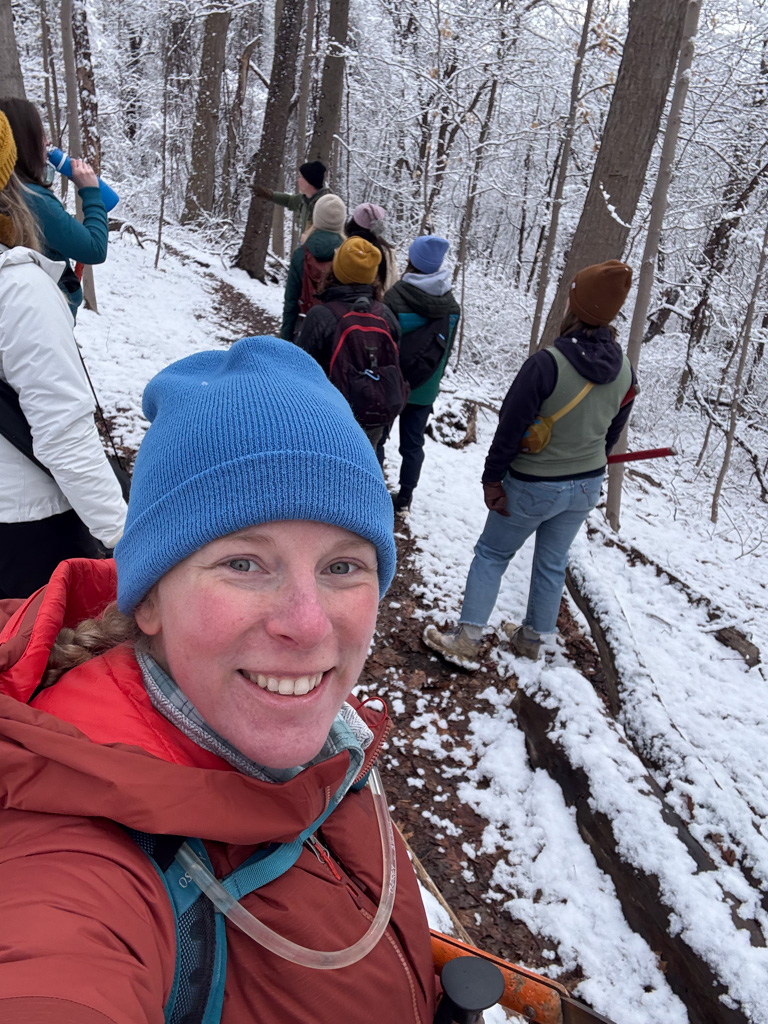
Hike and trailwork day at 26 weeks

It’s important to have everything you need for a hike, but make sure not to overpack or try to carry too heavy a pack. If you’re hiking with a partner or a group, see if others can take on some of the heavier items. You’re already carrying an extra load; you don’t need to add an extra heavy pack on top of that!

  1. Have a change of shoes in the car

You’ll thank me for this one. Have a pair of sandals or slides in the car to change into after your hike. The foot swell is real and nothing feels better than changing out of your boots and letting those toes breathe!

A final note: There’s a lot of pressure out there to be a #fitmom. Do your best to ignore these pressures (here’s looking at you social media) and only do what feels comfortable to you. While exercising is important, for me what made hiking throughout my pregnancy enjoyable was being able to recharge in nature, rather than getting in the miles. You never know how your body is going to react while growing a human. Real talk: Prior to my pregnancy, I had just finished a season of running more than I ever had in my life, even completing my very first ultramarathon. But by week 13, I was no longer able to run even a mile due to extreme pelvic girdle pain. Hiking became one of the only ways I could still comfortably enjoy nature. And even by the last few months of pregnancy, I couldn’t hike more than 2 miles. So, if you can, prioritize hiking for your mental health, rather than your physical one. And please remember to be kind to your body; it’s going through some stuff right now!

Looking for more hiking and gear tips? Check out my ultimate hiking gear guide to find all the things I personally recommend for a day on the trails

Earth-Friendly Tips: Hiking Edition

Looking to do your part this Earth Day? Here are some sustainability tips to make your next adventure more eco-friendly. Remember: you don’t have to make big changes to have an impact! Try adopting one or two of these suggestions on your next hike and see how it goes!

  1. Pack Out Trash – Make sure to always pack out your trash, including pet waste, compostables, and food wrappers, especially in areas where trash cans might not get emptied very often. I like to carry a trash bag in my hiking bag to also pick up any trash I see along the trail.

  1. Carpool to Trailhead – If hiking with a group, try to reduce fuel use by carpooling to the trailhead. Bonus, you won’t take up as much space in the parking lot and be less likely to park outside of designated areas

  1. Be a hiking steward – Recreate responsibly! Only park in designated areas and stay on marked trails. Don’t pick wildflowers and let animals be wild. Remember to always Leave No Trace!

  1. Educate Others – When hiking with new (and sometimes even experienced hikers) help them to understand how to be more sustainable hikers and gently remind others of the principles of leave no trace.

  1. Avoid single-use plastics – Whenever possible, try to avoid using wrappers or baggies that you immediately throw away. Opt for reusable sealable bags for snacks, bring water in a metal bottle or hydration pack, and dry bags for keeping electronics and gear dry. Or even just make sure to keep reusing a ziploc baggie!

  1. Repair Gear or Shop Secondhand – As much as we love new gear, sometimes all we need is to repair a tear or get a new zipper. Or if you really need to replace something, try to get it secondhand or check your local Buy Nothing groups. And make sure to donate or recycle old gear!

  1. Shop Local – Another gear one, always shop local for all your hiking needs! Not only does this support the local economy, but you can also have a better sense of where your products are coming from and choose to support businesses that invest in sustainable practices. Plus, it cuts back on shipping materials!

Let’s work together to preserve this beautiful planet for generations to come! Each person can do something small to make a difference this Earth Day!

Best Hikes & Hops in Pittsburgh

Looking for some hikes and brewery combos but want to stay within the City limits? This guide is for you!

  1. Frick Park & East End Brewing

Can you can a more classic combo than Frick Park & East End? When I think of summer, I think of meandering through Frick Park, with no true destination in mind followed by a crisp beer on the patio of East End Brewing. I suggest parking near the Frick Museum and taking Tranquil Trail all the way to the Nine Mile Run boardwalk. Once you reach Commercial Street, you can either turn around and retrace your steps or wind through some of the wooded trails like Falls Ravine, Riverview, and Clayton. After you’re satisfied, drive over to East End Brewing for a crisp brew and a deep-dish pizza.

  1. Emerald View & Inner Groove

This loop is the best of urban hiking! It starts out on the wooded Emerald View trail, meandering around Mt. Washington, then pops you out right at the overlook! From there, enjoy walking along Grandview Ave and then back through the historic neighbors of Mt. Washington. If you’re feeling extra frisky, you can even continue along the Grandview park section of the Emerald View trail. Or stop for a rest and treat at the Shiloh Street shops! The world is your oyster with this one. One big recommendation though is to end your excursion with a visit to Inner Groove’s Allentown taproom! They’ve got awesome beer, bar games, and an outdoor patio. What more could you want?

  1. Riverview Park & Late Addition Brewing + Blending

Riverview Park is a large 260-acre park in the North Side of Pittsburgh. It is a refreshing greenspace tucked into the busy Northside neighborhoods. There are wooded hiking trails, a pool, pavilions, a visitor’s center, and ballfields. But probably the most well known feature of the park is the Allegheny Observatory. There are many intersecting trails in the park, so I recommend having a route planned or downloading a map. This loop on AllTrails is a great way to see most of the park’s highlights. Afterward, check out the cozy taproom and patio at Late Addition Brewing + Blending on Western Ave for unique takes on traditional brews.

  1. Allegheny Cemetery & Coven Brewing

Allegheny Cemetery isn’t your typical hike but if you’re looking for an urban walk, I highly suggest you check it out! Before heading out, download the cemetery’s app/website for a self-guided tour that takes you to various notable graves with a brief history of the person. We learned so much about local history and got to take in the beauty of the cemetery grounds. Your walk can be as long or as short as you want, but afterwards, be sure to walk across the street to Coven Brewing! Take a seat outside, grab something from the food truck and enjoy a delicious brew. Coven is sure to be a new favorite! If you’re in the mood for an urban history hike and hop, this one’s for you!

  1. Schenley Park & Mondays Brewing (Greenfield)

I’ve been hiking and running in Schenley Park since my college days at Pitt. It’s a popular city park in the Oakland neighborhood near Pitt and CMU’s campuses. There are miles of single and double track trail with a lovely pond in the center. My favorite trail is the newly named Ponticulus Trail, which runs between the Upper and Lower Panther Hollow trails and is so beautiful. Afterward, you can head across the Greenfield Bridge to the Mondays Brewing Taproom in Greenfield. The newly opened space boasts tons of seating, a taplist of their own beers and some other Pittsburgh favorites, and a tasty menu from Smashed N’ Fried.

This list is ever growing! Stay tuned as I explore more of the hikes and breweries in Pittsburgh!

Looking for more adventures in Pennsylvania and beyond? Check out my new book: Beer Hiking Pennsylvania and New Jersey

The Ultimate Hiking Gear List

One of the things that I love about hiking is that you don’t have to have a ton of gear to get outside! Shoes and a water bottle and you’re on your way! However, there is a lot of gear that makes hiking more safe and more enjoyable. While you can always shop at your local outdoor store or places like REI, also think about thrift stores, consignments, or even local Buy Nothing groups. Being safe outdoors doesn’t have to cost a fortune!

Disclosure: This post contains affiliate links, meaning I get a commission if you decide to purchase something. I have only shared links for items I have personally tested and would recommend. All income I may receive goes back into hosting and running this site!

  1. Hiking Clothes
    1. Shoes
    2. Socks
    3. Clothing
  2. Hiking Gear
    1. Hats
    2. Gloves
    3. Sunglasses
    4. Packs
    5. Hydration
    6. Poles & Traction

Hiking Clothes

When it comes to hiking clothes, there’s no one-size-fits-all approach. The most important thing is your own comfort! A few general rules for clothing are to avoid cotton (it holds moisture so it can leave you very sweaty or cold), layer up, wear sturdy shoes, and protect from the elements (sun, rain, cold, etc).

If you’re looking to upgrade or invest in your hiking wardrobe, consider replacing key items with fabrics like merino wool, polyester, or nylon, which all are naturally moisture-wicking and will keep you more comfortable. Consider layers that have additional UV protection if you hike in sunny regions! Also, invest in good outer layers like a raincoat and winter coat to protect you from the elements. Remember to always check weather conditions before heading out and plan your gear accordingly.

Shoes

What you wear on your feet can really make or break a hike. While you definitely can get a lot of miles in tennis shoes, investing in trail shoes offers more traction and support. I’ve been a Merrell supporter since my first pair of hiking boots and I’ll probably never look back! I have weak ankles so I really like the higher fit of the Merrell Moabs which helps stabilize my ankle on uneven trails. The downside to hiking boots is that they can get heavy. If you’re looking for a lighter option, consider trail runners. I love my Hoka Speedgoats and have never fallen wearing them! If I’m doing an easy hike in the summer or I know there’s going to be stream crossing or a chance to go swimming, I’ll pack my Teva sandals. These are also great for leaving in the car to change into after a hike.

Merrell Moab Boots
Hoka Speedgoats
Teva Sandals

Socks

Anyone who has ever suffered from blisters knows that shoes are only as good as the socks you wear under them. The best socks for hiking are made of merino wool, which is quick-drying and warm. Seriously do not go with cotton socks! I love my Darntough crew socks not just because they come in cute designs but also because they keep my feet cozy in the winter and dry in the summer. They also last for ages. My first pair has lasted over 6 years! My second favorite brand is Smartwool, which I really like for my trail runners. These Smartwool ankle socks are lightweight but fast-drying and never slip down while I’m jogging.

Darntough Socks
Smartwool Socks

Clothing

You definitely don’t need specialized clothing to get into hiking. For years, I just wore regular gym clothes or comfy leggings or sweats. But if you’re starting to do a lot more hiking, it’s worth investing in a couple key pieces

  • Shirts – I love my REI Sahara shirt, it’s my go-to for warmer weather. I also use the REI Active Pursuits long sleeve shirt as a base layer year round. Both of these shirts have held up through major hikes and runs and I would definitely buy them again.
  • Pants – For years, Prana has been my go-to brand for hiking pants and shorts. They are pricey but the quality is so good and I really like that they dry very quickly and the pants are roomy enough to allow for leggings underneath on super cold days. The short never ride up and even on long hikes, I haven’t had chafing.
  • Leggings – Sometimes I prefer to hike in leggings or wear them under my other pants in winter. You don’t need specialized hiking leggings, but if you can, try to invest in non-cotton exercise leggings. I found these Swiftland Running Tights on clearance at REI and they’ve been my favorite hiking leggings.
Sahara Shirt
Active Pursuits Long Sleeve
Prana Hiking Pants
Prana Shorts
Swiftland Leggings

Outer Layers—No matter where you’re hiking, having the right layers is important. They keep you warm, protect you from the sun, and shield you from rain. I always pack extra layers when I’m out in the woods, as you never know how the weather might fluctuate.

  • Light jacket/Sun shade – During the summer, I always pack a lightweight fleece, sweatshirt, or windbreaker. I also almost always have my REI rain jacket, which I sized up so I can wear a fleece underneath it. I also picked up a Marmot rain jacket which I love for running or intense hikes because it has armpit zippers to help let out some of your body heat!
  • Fleece/Mid-weight jacket – You can’t go wrong with the Trailmade Fleece from REI. It’s perfect for layering and it packs away very easily. Just remember that fleece doesn’t offer any wind protection! I also have a number of quarter-zip sweatshirts that I got from Marshalls or clothing swaps that are great for adding an extra layer.
  • Puffy Jacket
  • Heavy Duty Winter Jacket – I dragged my feet for years about getting a good winter coat. I just couldn’t get over the price! But I finally got this Stormhenge Jacket from REI and I haven’t been cold on a winter hike yet!
Rain Jacket
Stormhenge Jacket
Fleece Jacket

Hiking Gear

Hats

Headgear is essential for sun protection, warmth, or both! It’s pretty rare that I hike without a baseball cap to keep my hair back and sweat off my face. I almost always just wear whatever basic ballcap I have on hand, but recently, I also invested in a UV protection and moisture-wicking hat for running and it’s pretty sweet. For the winter, I just wear whatever knit beanie I have on hand. Usually repping a local brewery! If you want to upgrade, thermal reflective beanies are always nice to have.

Sunblocking and moisture-wicking ball cap
Thermal Beanie

Gloves

If you’re hiking in the winter, invest in a good pair of gloves. Get a pair that is moisture-wicking, waterproof, and has a touchscreen fingertip. Some of my hiking and running friends like to pair a Merino wool glove liner with mittens or heavier gloves!

Sunglasses

If you’re like me, you loose sunglasses all the time. That’s why I really like the Goodr sunglasses. They’re relatively cheap so I don’t feel bad about replacing them nearly every season (why am I like this). Plus there’s so many fun colors! Just make sure to store them in the cloth bag they come in as the polarized coating easily scratches off.

Goodr Sunglasses

Packs

Packs are a great way to carry all you might need for a day of hiking. Even if I’m not going out for too long, I usually have some sort of small bag to carry water, snacks, and first aid supplies. Patagonia makes a series of really fun colorful hip packs that are perfect for stashing a snack and a phone. For a slightly longer hike, I use an old Camelbak slouch bag. This is a similar newer version! I really like having a water bottle sleeve so I don’t have to carry it around. A small pack is perfect for shoving extra layers too. For an all day adventure, I love my Osprey daypack. I got the Skimmer 20 with a hydration pack on consignment, but I’ve also heard great things about the Daylite packs. I actually use my pack as a carry-on for travels because I’m always shocked at how much I can fit into it.

Patagonia Hip Pack
Osprey Skimmer 20 Pack

If you’re looking to get more into overnight backpacking, check out Tory’s Must-Have Backpacking Gear over at My Trails are Many.

Hydration

Staying hydrated while hiking is essential, no matter the time of year or the length of hike. Make sure to carry a water bottle or water reservoir with you whenever you hit the trails. It’s funny how many water brands have exploded over the years. I’m not loyal to any one brand, but I prefer a sealable, metal bottle. I’ll take the extra weight if it means having cool water on a hike! An easy, hands-free way to carry water is in a water reservoir in a hydration pack. These reservoir (sometimes called bladders) come in a variety of sizes. I have both a 1.5 liter and 2.5 liter. Just remember that water is heavy so plan accordingly based on the length of your hike and the weather. I’ve also gotten in the habit of bringing my 2.5-liter on vacation trips which means I never have to buy plastic water bottles!

Osprey 2.5L Hydration Reservior

Poles & Traction

Let’s talk hiking poles. For a long time, I thought poles were only for really difficult mountain hikes. But I finally invested in a pair and I don’t think I’d ever go back. They are so useful for extra stability and absorb pressure on your knees going up or downhill. I invested in a pair or collapsible Black Diamond poles that come with snow attachments. They come in a pair and usually my partner and I each use one. I like how lightweight they are and that they easily can slide into my daypack if I don’t need them.

If you live in an area that gets snow and ice in the winter, you’ll want to invest in traction devices for your shoes. While some people hammer nails right into their hiking boots (yes, seriously), I’d recommend getting microspikes that stretch over your shoes and can easily be removed. I have a knock-off branch of Yaktraks like these that I got from a previous job and they really get the job done. If you’re going to be doing a lot of icy hiking, these Kahtoola microspikes can’t be beaten. Remember to always check weather conditions before heading out and know when to turn around if conditions are unsafe!

Black Diamond Trekking poles
Yaktrax Traction
Kahtoola Spikes

Remember, there’s a lot of gear out there but you don’t need everything to enjoy a day in the woods! These are just some suggestions if you want to get more serious about your hiking addiction hobby. Have a favorite brand or notice a key thing I’m missing? Reach out and let me know!

Tips for Saving on Gear

Gear is expensive. I’ve been building up my collection slowly and started out by only investing in a few key items. I’ve been able to save money by sourcing gear a few different ways:

  • Gear Swaps – my trail running group has seasonal gear swaps where we trade clothing and other gear that we no longer need. I’ve been able to get lots of clothes this way!
  • Consignment or Resale – Check your local outdoor shop for a consignment or resale section. REI locations have the Resupply used gear section where you can sometimes find great deals.
  • Sales – Shop strategically throughout the year to sale steep discounts! I always make sure to buy new running shoes or boots on Labor Day or Memorial Day when REI has the biggest discounts
  • Facebook Marketplace and Buy Nothing – It takes a bit more work, but I’ve seen some really good deals on gently used gear on Facebook! Just make sure to set up a time to check out the item and don’t go alone if you can help it.
  • Borrow first – For some major purchases, think about borrowing from a friend or renting from an outdoor store first. For my first backpacking trip, a friend lent me gear so that I could test things out

Ready to start planning your next adventure? Check out my recent hikes for inspiration! Happy hiking!

/

Looking for more adventures in Pennsylvania and beyond? Check out my new book: Beer Hiking Pennsylvania and New Jersey