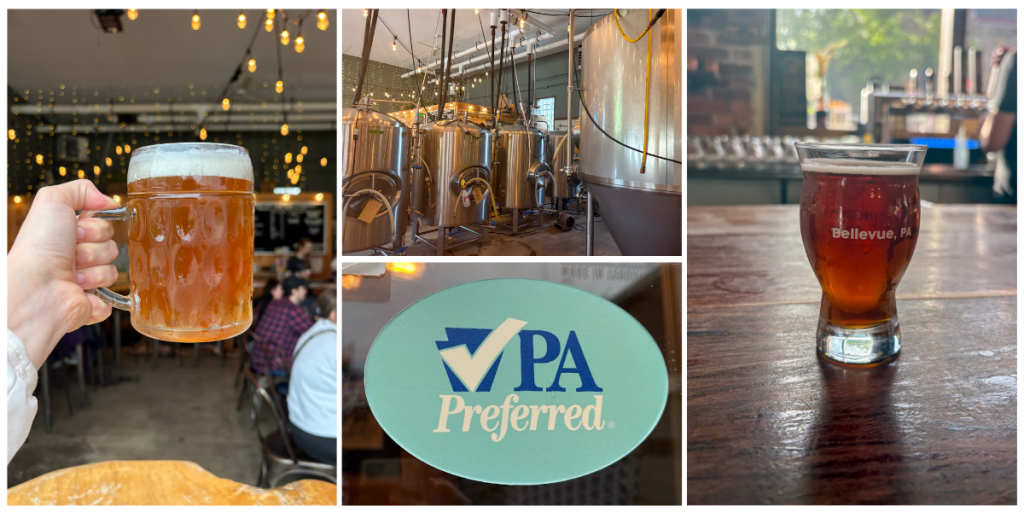
This post was paid for with Pennsylvania Taxpayer Dollars and sponsored by the PA Department of Agriculture. However, all thoughts and opinions are my own.
After a hard day’s work, what better feeling is there than cracking open a cold one on a warm sunny day? But as you enjoy the crisp carbonation of that bitter liquid, do you really know where your beer comes from? A fresh beer can be even more satisfying when it’s brewed and sourced locally!
Here in Pennsylvania, we have over 500 craft breweries, second only to California. For beer to be considered “craft” it is typically made by an independent company using traditional ingredients on a small scale. When you visit a craft brewery, you’re having the freshest beer, made by hand in an onsite brewing facility. Sometimes you can even see the brewing equipment around the corner while sitting at the bar!

But to understand where the beer is coming from, we need to back up and remember the basics. Beer is a combination of basic ingredients: water, barley, yeast, and hops. But what sounds simple can turn into a complex alchemy of sourcing ingredients to get a specific flavor profile. Hops are the ingredient that gives beer its quintessential bitter flavor. They typically need a mild, wet growing environment to thrive, which can be difficult to achieve outside of specific geographic regions; most hops grown in the US come from the Pacific Northwest for this reason. While hops are the flashy component, malt is the backbone of beer. Malt is a grain that has been partially sprouted, then dried. It’s used in a variety of foods and drinks, but it’s integral to beer because it provides the sugars that start the fermentation process, thereby putting the booze in your brews. The type of malt used also contributes to the final beer’s color and flavor. Finally, the fermentation process can’t happen without yeast. This microorganism loves to chomp up the sugars in malt and converts them to carbon dioxide and alcohol. Along with water, these three ingredients make up the beverage we know and love!
With the scale of craft beer production in Pennsylvania, brewers need a lot of grain and hops. So, where do they get these products? Many source hops and malt from major distributors in the Pacific Northwest or internationally. However, a growing number are turning to our own booming agriculture industry here in the Keystone State.
Pennsylvania has over 7.7 million acres of farmland, most of which are family-owned farms. These nearly 49,000 farms support a multi-billion-dollar industry that supplies jobs and food right here in our state. So it seems like a natural leap for small businesses to source supplies and ingredients from farms right in their backyard, right? PA-Preferred, a program of the PA Department of Agriculture, is a resource for finding locally made food and farm products in Pennsylvania! With this resource, both consumers and producers can easily find businesses to source ingredients from, whether it’s for hobbyist homebrewers or full-time production brewers.
For Nick Salkeld, brewer and owner of Stick City Brewing in Mars, PA, using local products is a no-brainer. “You can physically go out and see the product. You can immediately see and meet the person who grew it,” he said. “You can even see the dirt where it came from.”
Sustainability is a huge part of Salkeld’s mission, and buying local is a key part of that. He often works with a malt supplier in Butler County, CNC Malts, for custom malt blends to get the exact flavor profile and coloring he’s aiming to achieve for his beer. All of the grains at CNC Malts are sourced locally and floor-malted right in Butler County. More than that, Salkeld has a personal connection to the company. The maltsters’ (which is what you call a person who makes malt) processing facility is the old Clearfield Schoolhouse where Salkeld’s dad went to school. It can’t get more local than that!
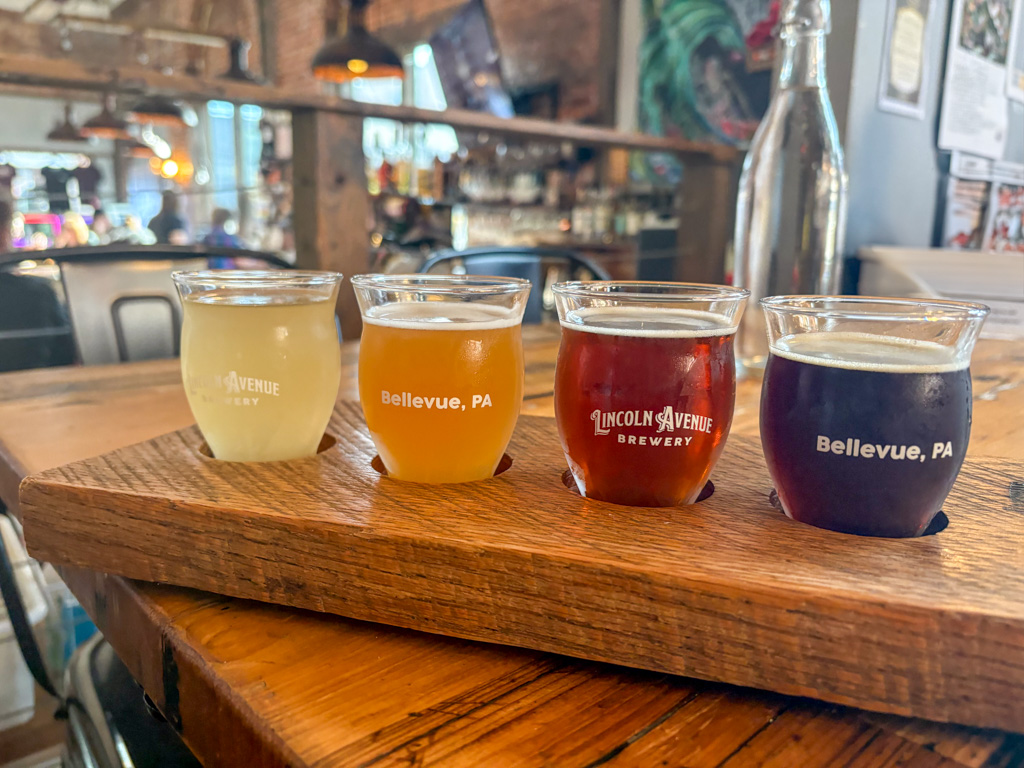
Lincoln Avenue Brewery in Bellevue, PA (affectionately called LAB) also sources much of its malt from CNC Malts. The brewery also boasts a full kitchen, so it’s not just about sourcing local beer ingredients but the whole range of foods to stock their kitchen. A rotating menu based on seasonal fruits and veggies means that they can buy the bulk of their produce from Haffey Farms, a Bellevue Farmers Market staple. For Lisa Saylor, brewery co-owner, buying local just makes sense because it supports a regional sustainability circle. The spent grains from their house-made beer are given back to local farmers to feed their livestock. In turn, that livestock might eventually make its way to Tom Friday’s Market, a butcher shop where Lincoln Avenue sources the bulk of its meat. Talk about farm to plate!
Working with local products and producers is a “more iterative process, rather than top down,” says Salkeld of Stick City. He can work directly with the folks at CNC Malts to create custom grain blends that give Stick City’s beer a unique flavor. But what about those pesky hops that prefer the Pacific Northwest?
It’s notoriously difficult to grow hops in the Pennsylvania climate; as the saying goes, “it’s a wet heat”!. But that’s not stopping some plucky PA farmers from giving it a shot! Especially when a survey from Penn State Extension school found that a majority of craft brewers in the state are inspired by sourcing locally. Stick City, for one, adds fresh hops grown in Western PA by Hazy Daze Farms to their late August beers (when hops are harvested) and also sources dried and pelletized PA-grown hops from CNC Malts. Through the PA Preferred online database, any brewers interested in local hops and grains can find PA farmers growing them.
PA’s brewery culture is booming, and it can only get stronger with more emphasis on sourcing local ingredients. Through the PA Preferred Program, brewers can easily find local farmers to partner with and strive toward beers that are homemade and homegrown, with a taste of Pennsylvania in every sip!
Want to learn more about the PA Preferred Program and how you can support local farmers? Check out www.papreferred.com or follow them on Instagram for announcements of new members to the program.

 Hikes and Hops